Careful, Lasting Dental Work in Paxton for Adults and Kids
We provide exams and cleanings, fillings, crowns and bridges, clear aligners, whitening, extractions and kids' dentistry for patients from Paxton, Holden and Rutland. Every restoration is shaped, sealed at the edges and tested against your bite before you head home, since those small steps decide how many years the work holds.
- Bite checked before you leave
- Over 11 years in practice
- We accept most dental plans
- CareCredit financing offered
Patients We See Around Paxton
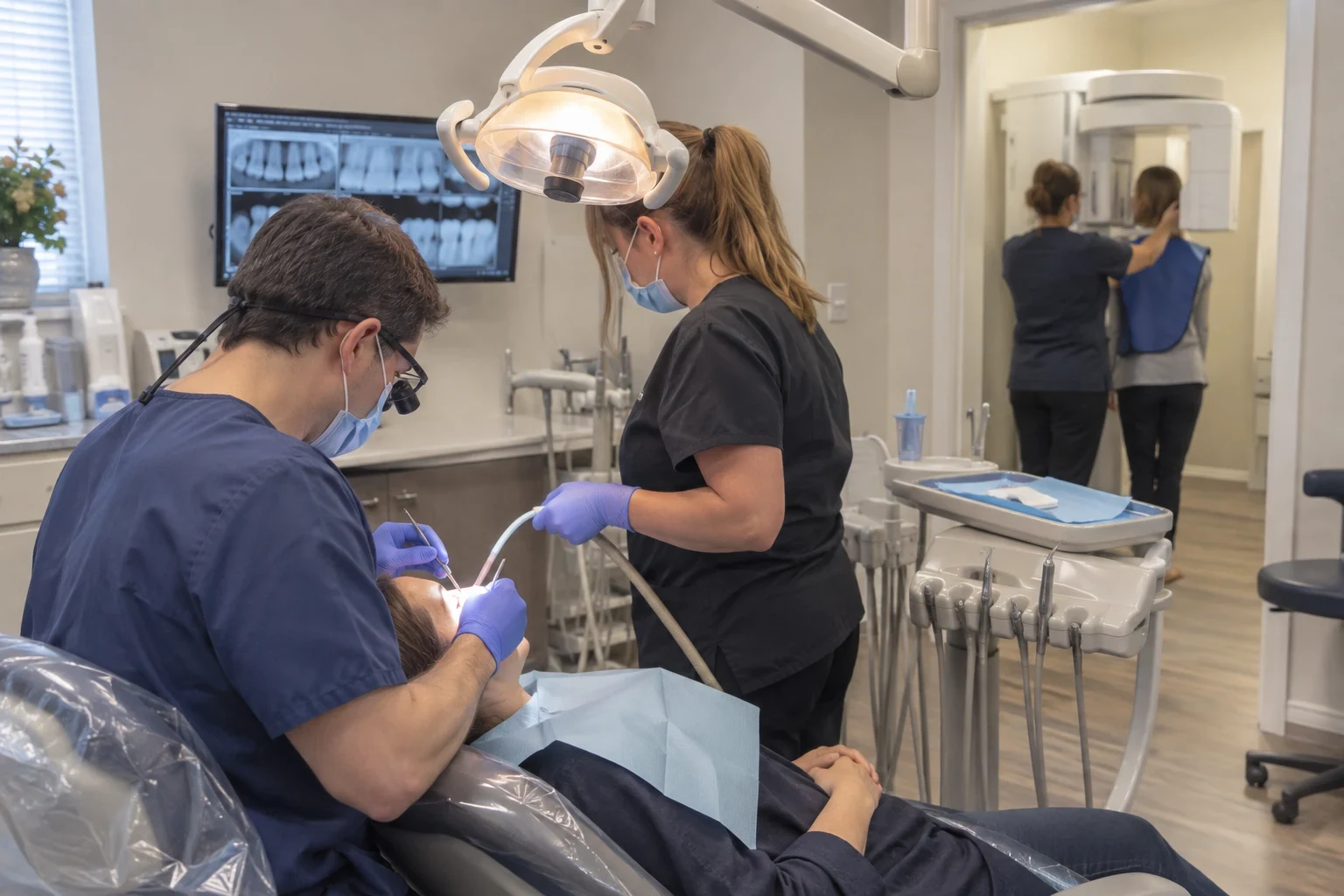
We treat patients right here in Paxton, and plenty of families make the short trip from Holden, Rutland, Leicester and Spencer for their checkups and restorations. Others come from Worcester, Auburn, West Boylston, North Brookfield, Shrewsbury and Millbury because they prefer a smaller office where a dentist has time to walk through the X-rays with them.
- Paxton
- Holden
- Spencer
- Leicester
- Rutland
- Worcester
- Auburn
- West Boylston
- North Brookfield
- Shrewsbury
- Millbury
Every exam and procedure takes place in our office. Scheduling and insurance questions can usually be sorted out by phone or video before your first appointment.
Dental Care for Every Age
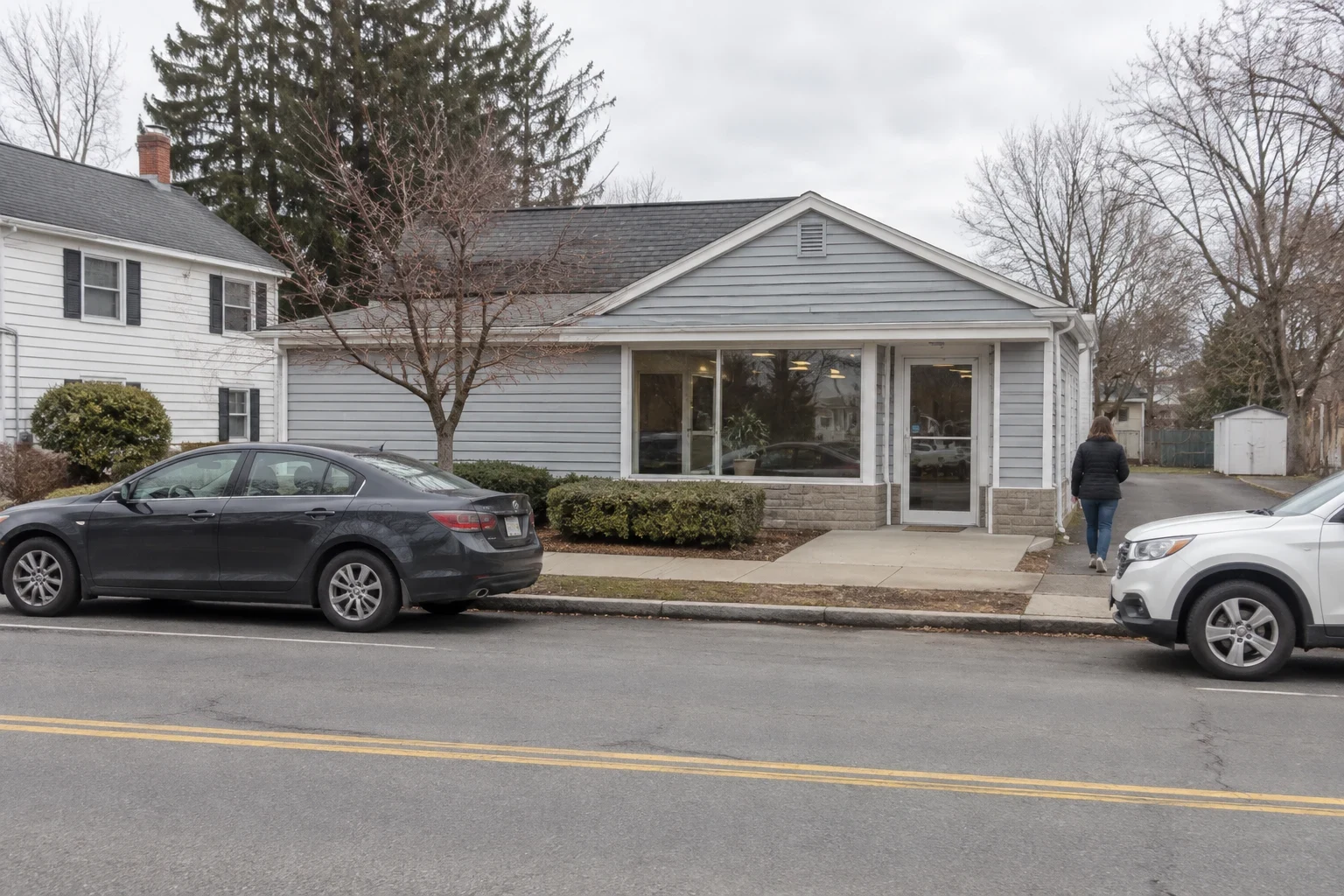
Over 11 years in practice, the bulk of our work has been everyday dentistry handled with care: exams and cleanings, fillings, crowns and bridges, and extractions when a tooth is past saving. We also provide Invisalign and other clear aligners, teeth whitening, and kids' dentistry starting with a child's first teeth. Each service page covers what the appointment involves, where that type of work tends to fail, and what we do to head it off.
Crowns & Bridges
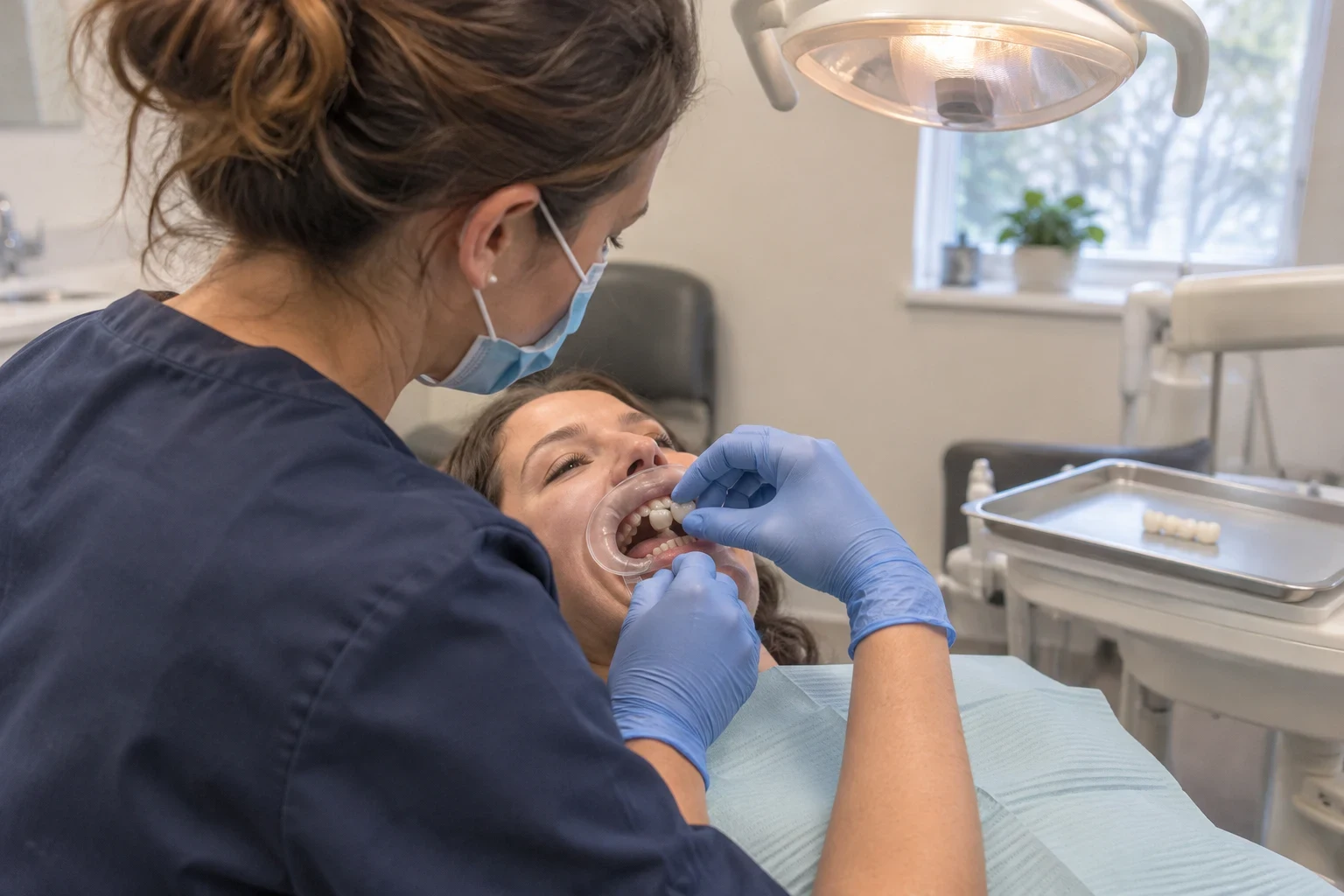
Crowns to protect cracked or heavily filled teeth and bridges to close a gap, made with tight margins and a bite that is adjusted before anything is cemented.
Invisalign / Clear Aligners
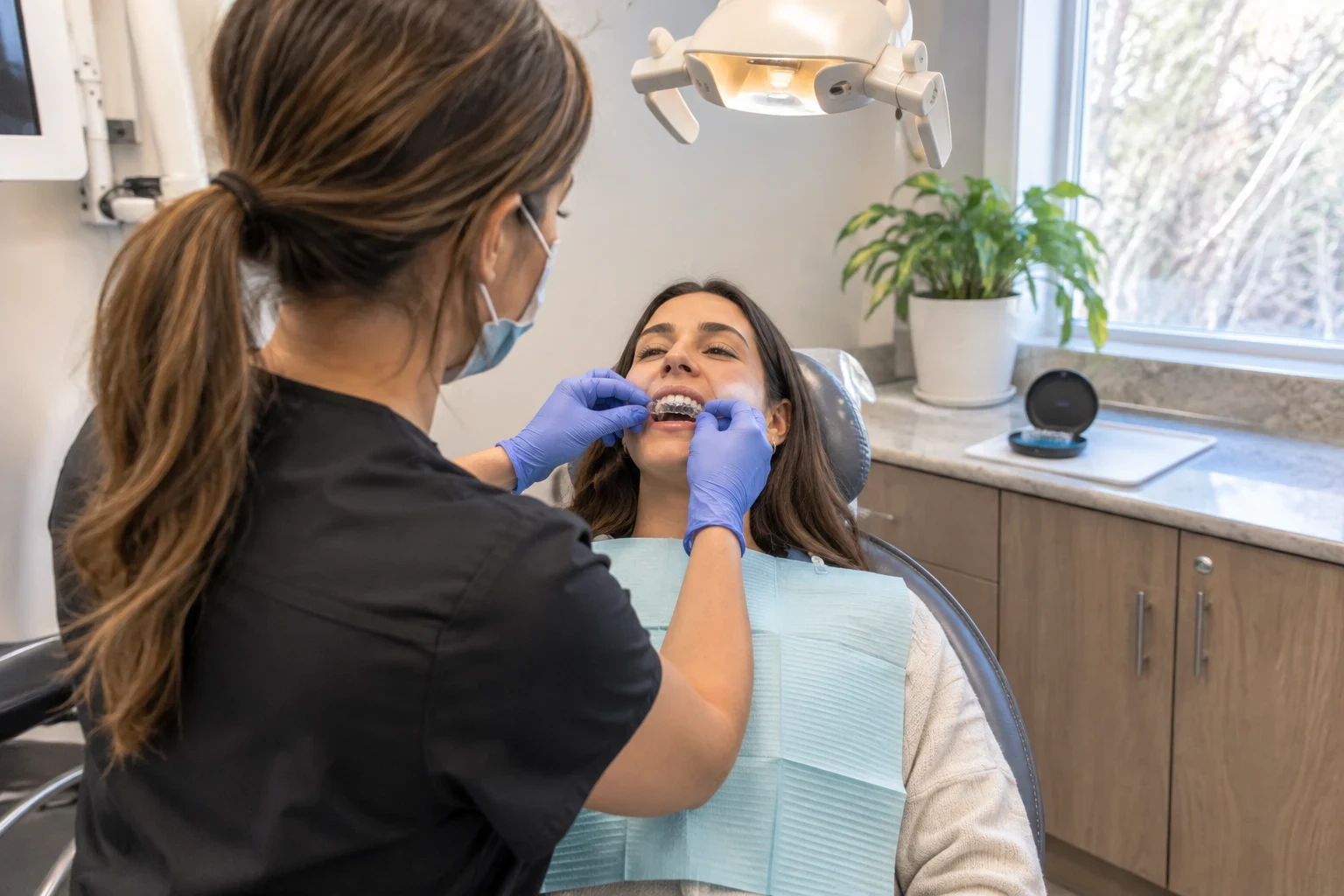
Straighten crowded or spaced teeth with removable clear trays, planned from a detailed scan and checked for fit at every stage.
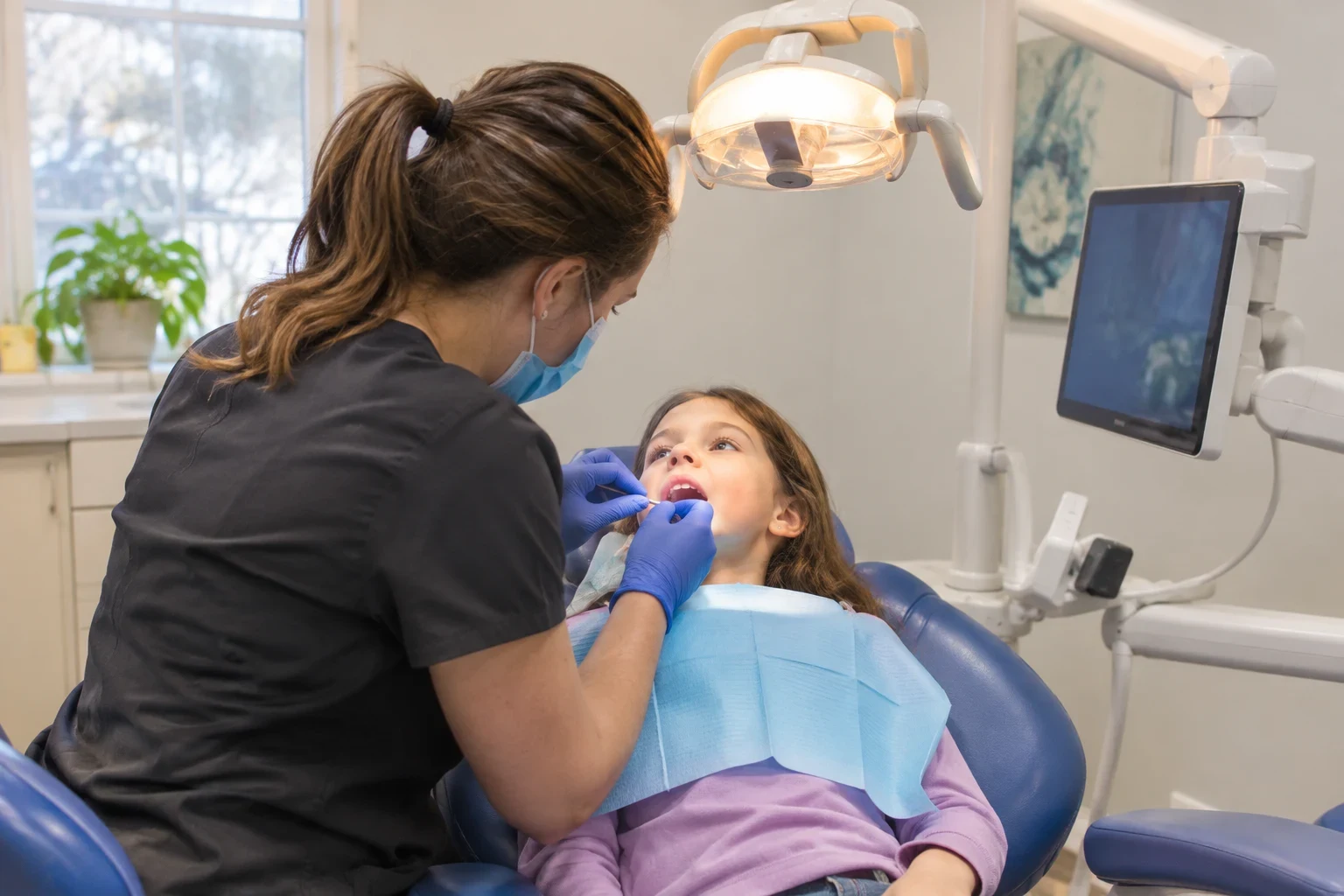
Kids' Dentistry
Checkups, sealants, fluoride and small fillings for children, done with a dry, clean field and a calm pace so the work stays in place for years.
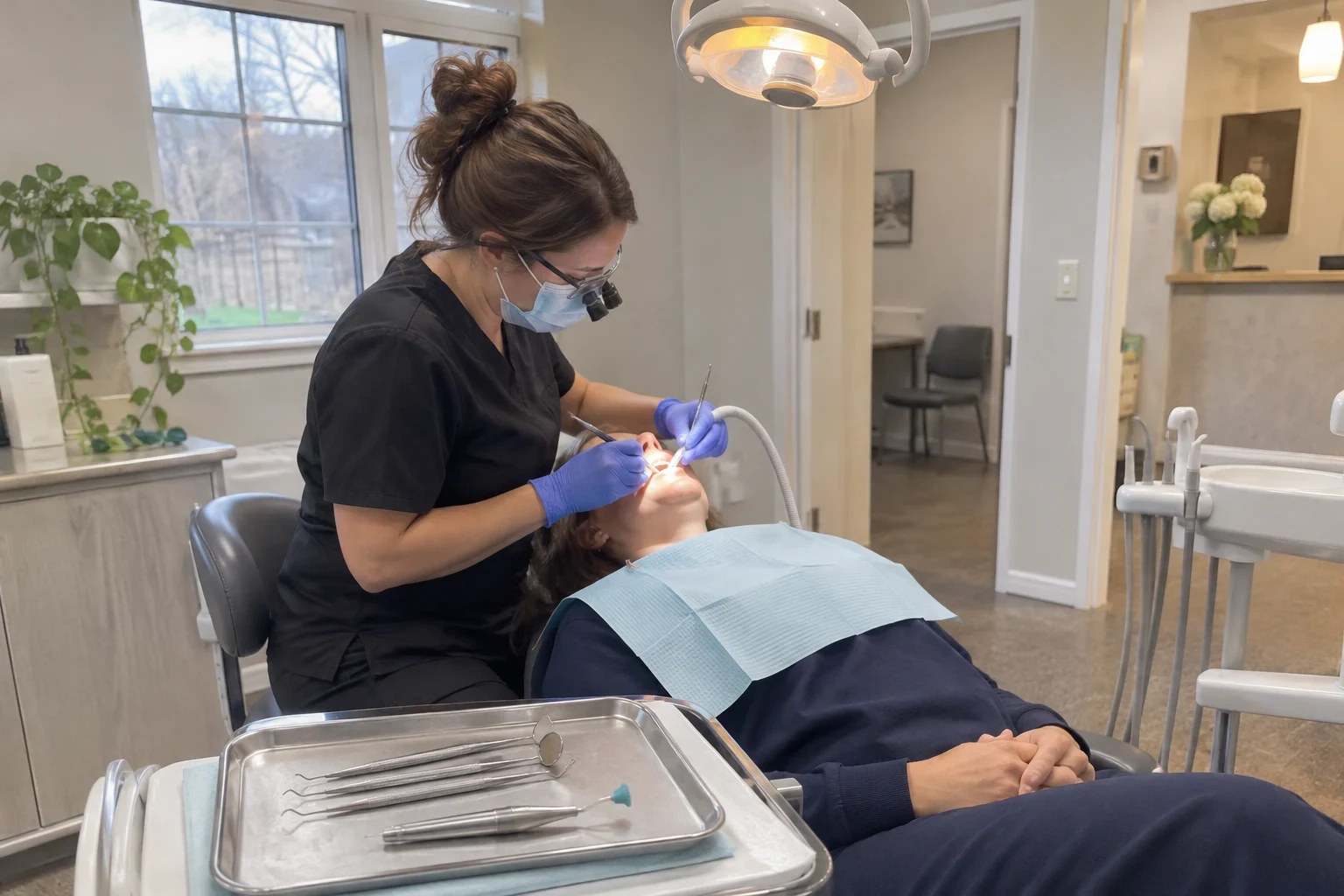
Exams & Cleanings
A checkup that measures your gums, checks the edges of old fillings and crowns, and clears tartar from below the gumline where brushing can't reach.
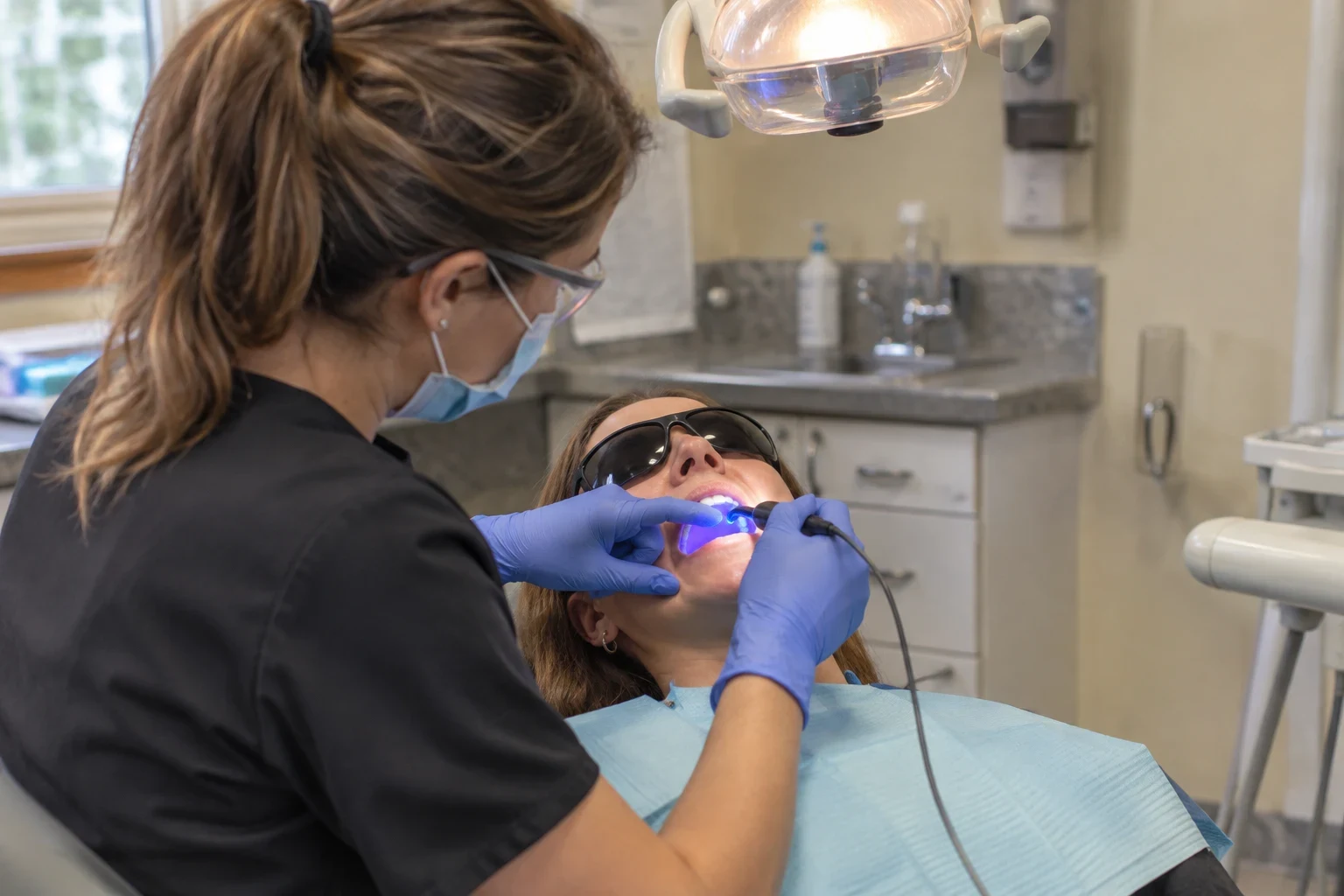
Fillings
Decay cleaned out to firm, healthy tooth and replaced with layered tooth-colored composite, with the edges sealed and your bite adjusted before you leave.
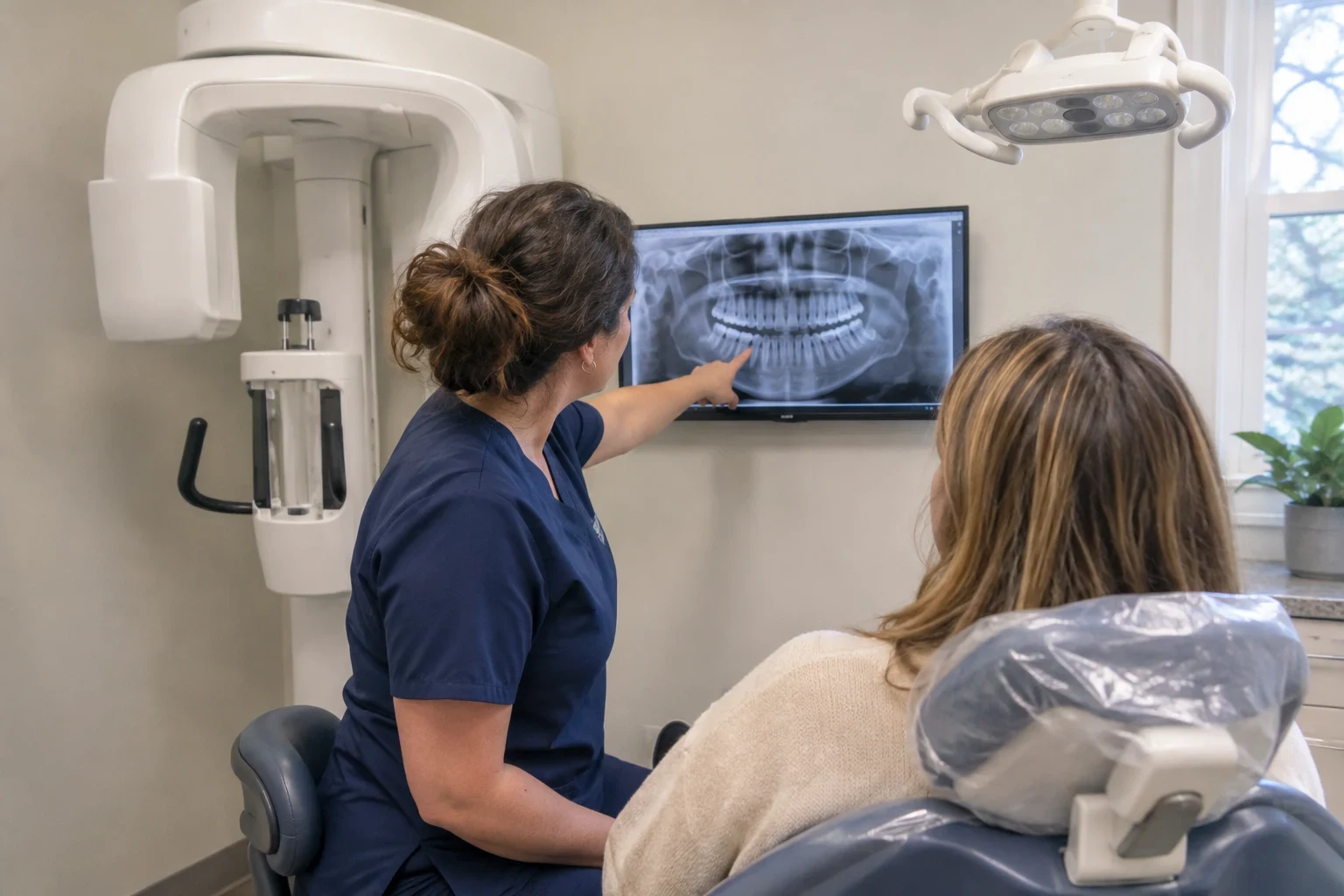
Teeth Whitening
Professional whitening with custom trays, gum protection and a recorded starting shade, planned around any crowns or fillings you already have.
Extractions
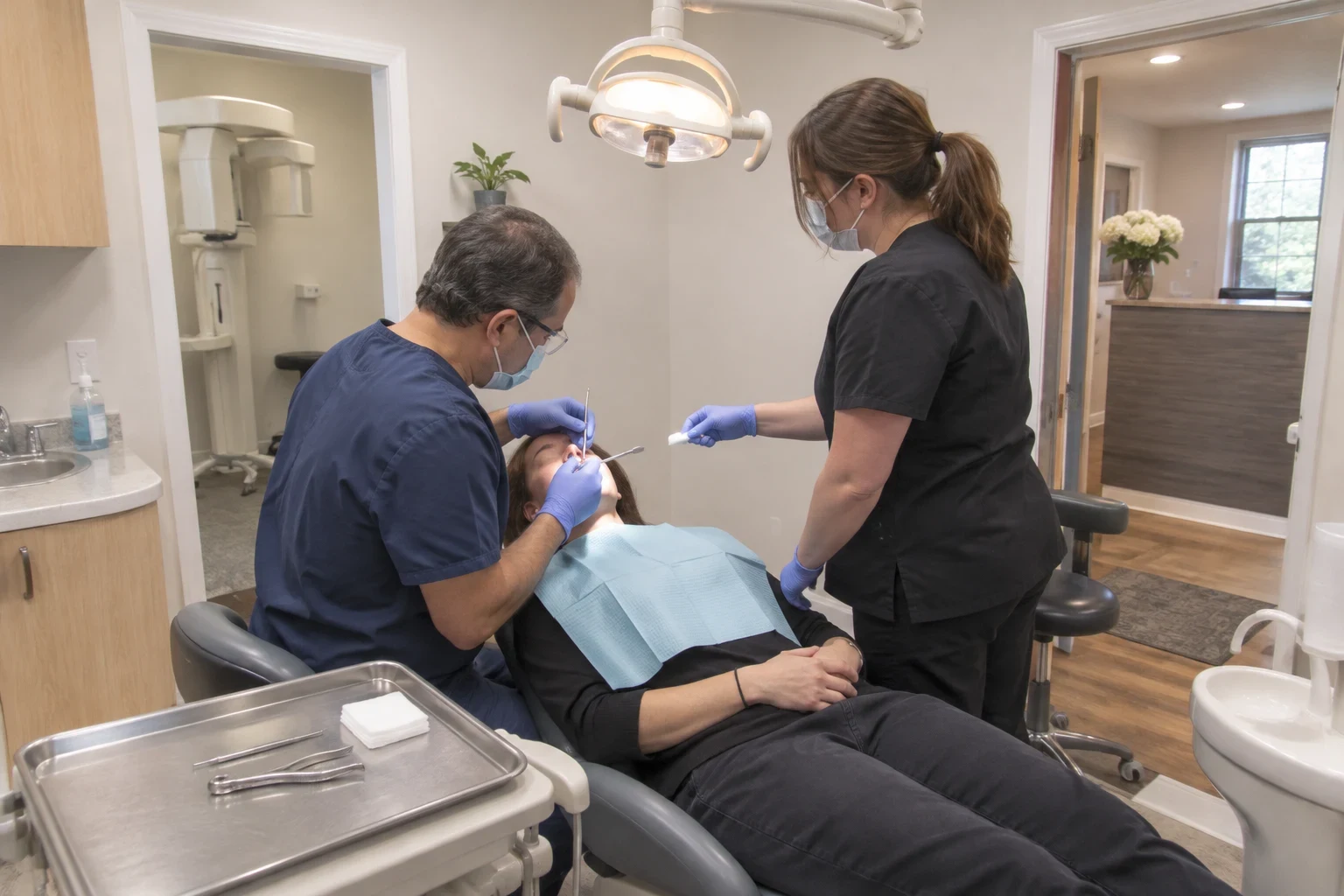
Removal of broken, infected or crowded teeth, with care to preserve the socket, a clear aftercare plan and a talk about what replaces the tooth.
About Our Practice
We are a general and family dental practice in Paxton. Parents bring their kids for first visits and fluoride varnish, and the same parents come in for their own crowns, cleanings and whitening. Seeing a whole family over years lets us notice patterns, like a child who grinds the way a parent does.
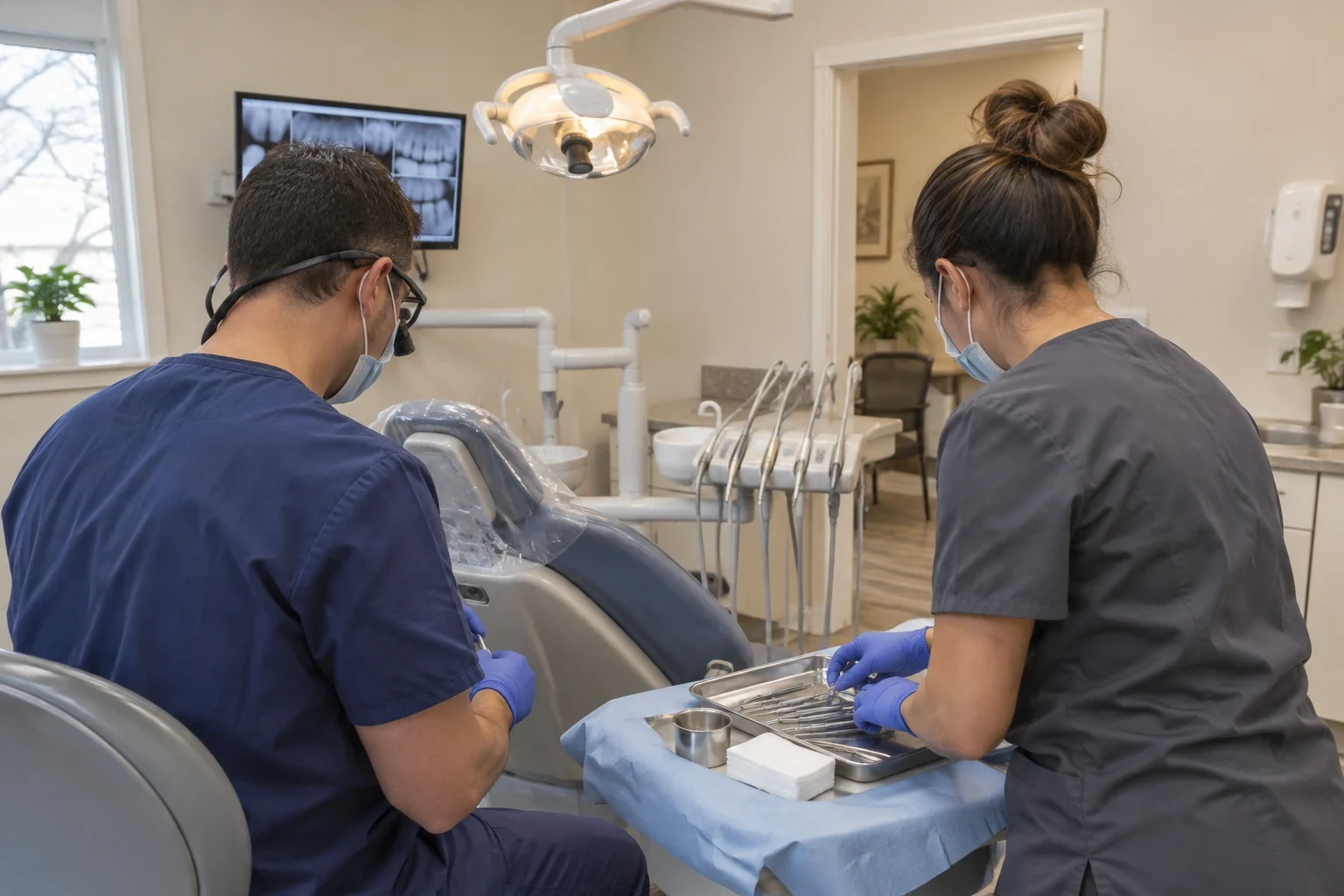
Our approach is unglamorous. We take time on isolation, bonding and bite adjustment because those steps decide whether a filling lasts or leaks. When something can be watched instead of treated, we say so. When a tooth cannot be saved, we explain why and talk through what comes next.
- In business
- In practice over 11 years
How a Visit Works
Most treatment follows the same pattern, whether you came in for a checkup or a cracked molar.
- 1
Book by phone
Tell us what is going on and whether you have insurance. If a tooth hurts, say so, and we will find the soonest opening we can.
- 2
Exam and X-rays
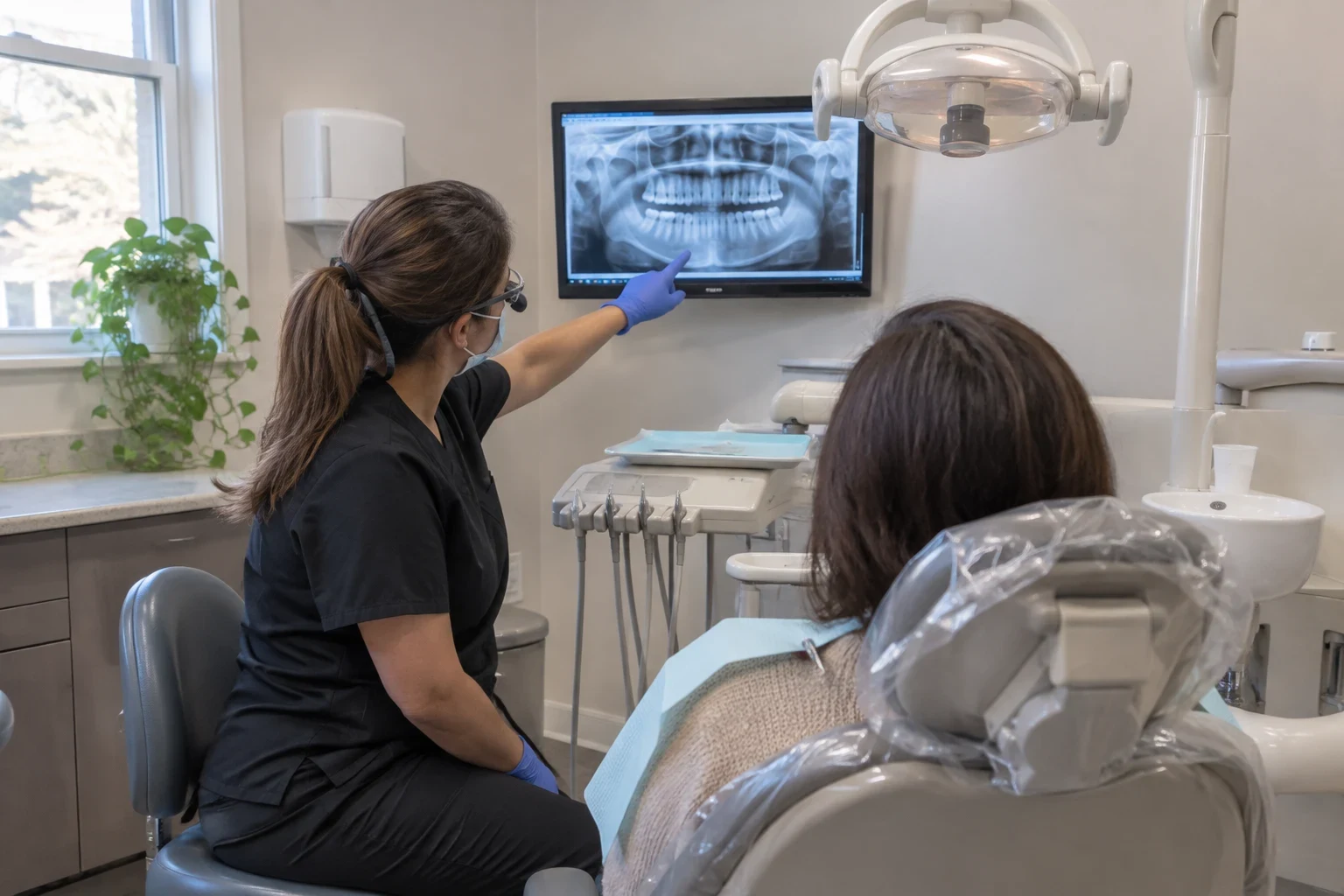
We look at every tooth, check the gums with a probe, and take the images we need. You see the same pictures we see.
- 3
A written treatment plan
We list what needs care now, what can wait, and the cost of each item. Nothing is started that you have not agreed to.
- 4
Treatment with careful finishing
We isolate the tooth, place the restoration, then adjust the bite and smooth the edges before you leave.
- 5
A check at your next cleaning
At recall visits we look at past work for wear, staining at the margins or changes in the bite, and catch small issues early.
What Shapes the Cost of Your Treatment
Two patients with the same diagnosis can end up with different bills, and most of the difference comes from the tooth itself. We go over your X-rays and exam findings with you before giving any figure. These are the things that usually move it.
After the exam, your written plan lists each recommended procedure on its own line, with the part we expect insurance to cover and the part left to you. Patients without coverage can ask about our Office Dental Plan, and larger treatment can be spread out with the CareCredit Patient Payment Plan.
- How much healthy tooth remains
- A small cavity takes a simple filling. When decay or a crack has claimed a large share of the tooth, it may need a core buildup first so the crown sits on solid structure instead of a thin shell.
- The material that fits the tooth
- Composite, porcelain and zirconia differ in strength, wear and appearance. We suggest what suits the tooth's position and your bite force, and explain the tradeoffs if you prefer something else.
- How many teeth are involved
- A bridge fills a gap by crowning the teeth on either side, so it is planned and priced as several connected units, not one.
- Your plan's benefits
- Most dental insurance plans are accepted at our office. What you owe still depends on your yearly maximum, your deductible and how your carrier divides basic and major work.
- Aligner case complexity
- Crowding, spacing and bite correction call for different numbers of trays and refinement rounds, and that changes the total.
Why Patients Stay With Us
A filling or crown rarely fails in the middle. It fails at the edge, where the material meets the tooth. That is where we spend our time.
- 01
Margins that seal
Decay returns wherever a restoration leaves a gap or a ledge. We keep the tooth dry while the adhesive sets, place composite in thin layers and cure each one, and check crown edges with an explorer and a bitewing X-ray so nothing is left open for bacteria.
- 02
Bites checked, then checked again
A crown or filling that sits a fraction too high can crack the opposing tooth or leave the jaw sore. We mark your bite with articulating paper, adjust, and recheck in both straight closing and side-to-side movement.
- 03
Over 11 years of habits that matter
Our practice has been at this for over 11 years. You see it in small routines, like clearing every bit of cement from under a crown and polishing a filling smooth so floss glides past rather than catching and fraying.
- 04
An honest answer on what to fix
Not every stained groove needs drilling. We show you the X-ray or intraoral photo, tell you what we would watch and what we would treat now, and let you decide.
- 05
Comfortable for kids and nervous adults
We numb slowly, explain each sound before it happens and stop when you raise a hand. Children get a short tour of the chair before anything starts.
Questions Patients Ask
Something not covered here? (508) 938-8969
Will my insurance plan work at your office?
Most dental insurance plans are accepted here. When you call to book, keep your member ID and the name of your plan nearby so we can check your benefits before you arrive. The treatment plan we hand you then separates what your carrier is expected to cover from what you will pay.
What if I don't have insurance?
Patients without coverage can join our Office Dental Plan. It is run by our practice itself rather than by an insurance company. Ask about the details when you call and we will explain what it covers.
Can I spread out the cost of a crown or bridge?
Yes. The CareCredit Patient Payment Plan is available, so a larger treatment does not have to be paid all at once. When it is safe, we can also stage the work over several visits and start with the teeth that need care soonest.
I broke a tooth. Will I need a crown or just a filling?
That comes down to how much tooth remains and which direction the break runs. A small chip on a front tooth can often be repaired with tooth-colored composite. A back molar that has lost a cusp usually needs a crown, because a big filling there flexes under chewing and can split the walls that are left.
When should my child first see a dentist?
Around the first tooth or the first birthday, whichever comes first. Those early visits are short and focus on checking development, cleaning gently and talking with you about brushing and diet. If your water comes from a private well, we will also ask about fluoride, since many wells carry little of it.
How long do crowns and fillings last?
There is no fixed number. Lifespan depends on how well the margins seal, how hard you bite or grind, and how well the area is cleaned. A crown with tight margins, a balanced bite and regular cleanings has the best odds. If you grind, a night guard helps protect the work.
What happens at a new patient visit?
We review your health history, take the X-rays we need, examine each tooth and the gums, and talk through what we found. If you are due, we may clean your teeth the same day. You leave with a written plan for anything that needs care.

Ready for a Careful Checkup
Whether it is a routine cleaning, a tooth that has started to ache, or your child's first visit, the first step is getting on the schedule.