ServicesCrowns & Bridges
Crowns & Bridges in Paxton
When a tooth is cracked or worn down by old fillings, a crown caps it and takes the chewing load. When a tooth is gone, a bridge fills the space using the teeth on either side as supports. We shape, record and bite-check each one before it is cemented.
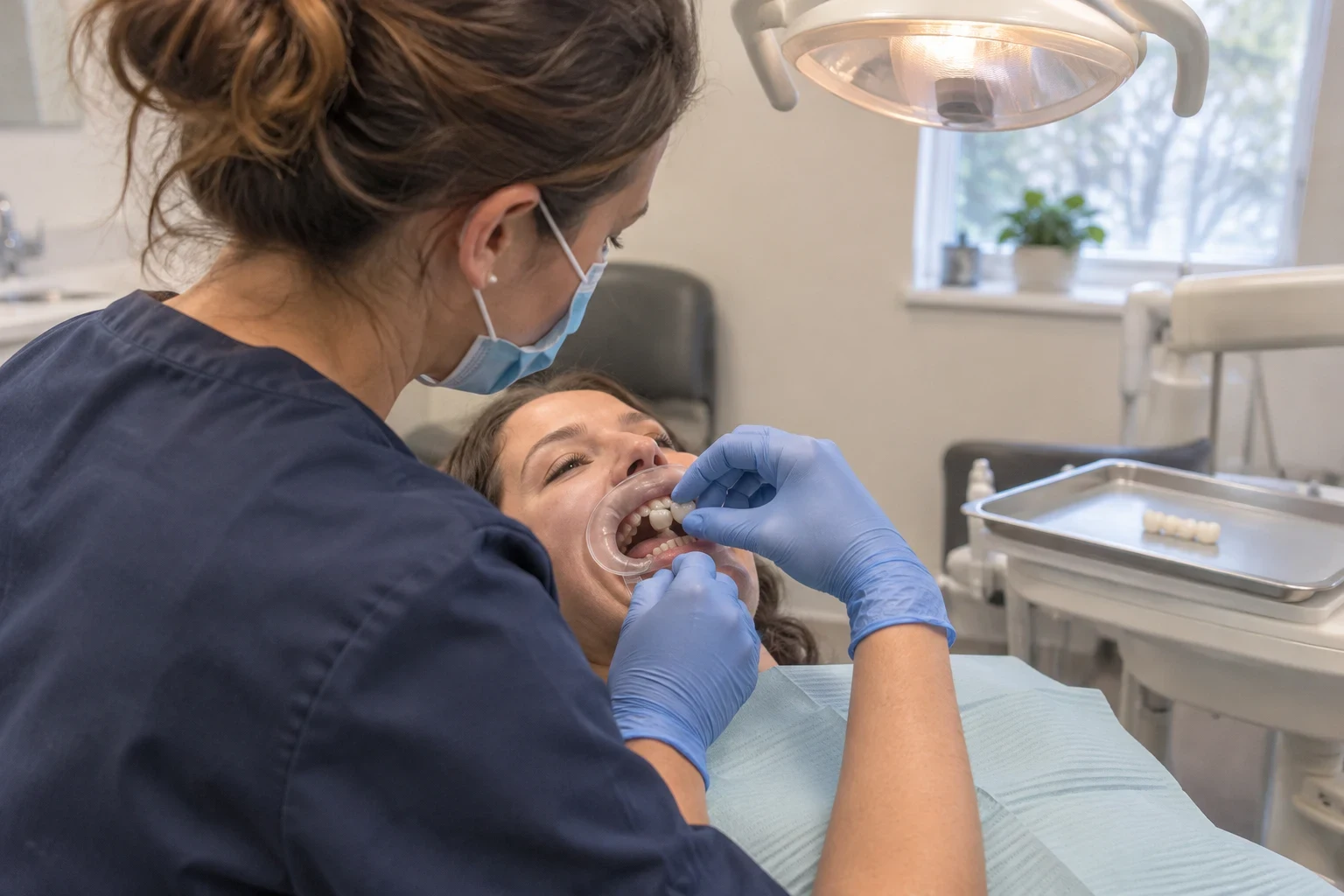
When a crown or bridge is the right call
A filling works when enough healthy tooth remains around it. Once a large old filling, a crack or a root canal has left the walls of a tooth thin, chewing forces can split it. A crown wraps the whole tooth and spreads that load, so the tooth can keep working instead of breaking further.
A bridge solves a different problem. When a tooth is lost, the neighbors tip into the space and the opposing tooth drifts toward it, which changes your bite over time. A bridge uses crowns on the teeth on each side to hold a replacement tooth in the gap.
We have been in practice over 11 years, and the crowns and bridges that last tend to share the same small details: a clean, continuous margin where the crown meets the tooth, enough reduction for the material to be strong, and a bite that has been checked tooth by tooth. That is where we spend our time.
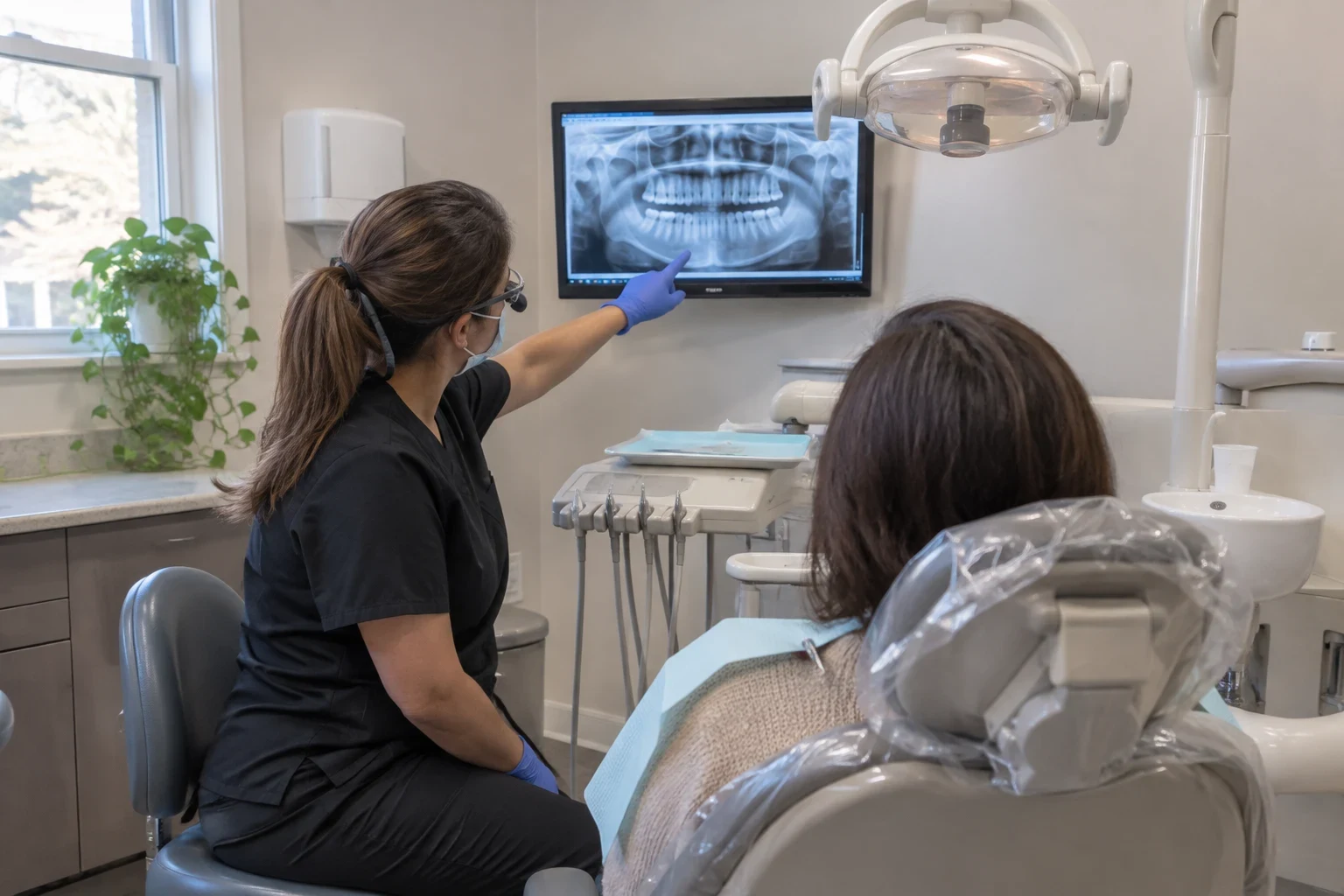
What your crown or bridge work includes
- 01
Diagnosis with X-rays
Before recommending a crown, we look at the root, the bone and any decay under old fillings. If a filling would do the job, we tell you so.
- 02
Careful tooth preparation
We remove old filling material and decay, then shape the tooth with an even taper. Too little reduction makes a thin, weak crown; too much weakens the tooth underneath.
- 03
Precise impressions
The impression has to capture the margin all the way around the tooth, including below the gumline. We control bleeding and moisture first so the edge records cleanly for the lab.
- 04
A well-fitted temporary
While your crown or bridge is made, a temporary protects the prepared tooth, keeps it from shifting and keeps sensitivity down.
- 05
Fit and bite check before cementing
We test the final restoration for seating, contact with the neighboring teeth and margin fit, then mark and adjust the bite so no single spot takes too much force.
- 06
Care instructions for bridges
A bridge needs floss threaded under the replacement tooth. We show you how, since plaque trapped there is a common reason bridges fail.
Questions about Crowns & Bridges?
Call(508) 938-8969When a crown or bridge may be due
A sharp twinge as you release a bite
Pain that flashes when you let go after chewing is a classic sign of a cracked tooth. A crown holds the pieces together so the crack is less likely to travel toward the root.
A big filling that keeps chipping
When old filling material takes up most of a tooth, only narrow shells of enamel are left, and they bend under every bite. Repeated breaks usually mean the tooth needs full coverage rather than another patch.
A back tooth that has had a root canal
Molars and premolars turn more brittle after root canal treatment. Capping them with a crown helps keep them from splitting under chewing pressure.
An empty space where a tooth used to be
Teeth next to the space can lean in, and food tends to pack there. A bridge holds the teeth where they belong and lets you chew on that side again.
A dark line or bad taste around an old crown
A gray edge at the gum, a sour taste or floss that frays as it passes can mean the seal has opened. Decay can then start under the crown where you cannot see it.
How the visits work
- 1
Exam and treatment plan
We examine the tooth, take X-rays and explain your options, including what happens if you wait. You get a written treatment plan with the costs laid out before any work begins.
- 2
Preparation visit
After numbing the area, we shape the tooth, take impressions, match the shade to your other teeth and place a temporary. Most patients are comfortable and back to normal routines the same afternoon.
- 3
Fitting visit
Once the lab returns your crown or bridge, we remove the temporary, clean the tooth and try in the restoration. We check margins, contacts and bite before it is cemented in place.
- 4
Follow-up at your cleanings
At your regular exams and cleanings we check the margins and gum health around the crown or bridge so small problems are caught early.
What moves the price of crown and bridge work
Most of the fee comes down to three things: how many teeth are involved, which material we choose and how much rebuilding the tooth needs before it can hold a crown. Your treatment plan breaks out each item, so you can see where the cost comes from before you agree to anything. Most dental insurance plans are accepted here. If you have no coverage, our Office Dental Plan is an option, and the CareCredit Patient Payment Plan lets you spread payments out.
- Number of units
- One crown covers one tooth. A bridge is at least three units joined together, a crown on each supporting tooth plus the replacement tooth between them, so the lab and chair time are greater.
- Crown material
- All-ceramic, zirconia and porcelain-fused-to-metal each have their own strength, look and lab fee. A molar that takes heavy chewing force and a front tooth people see when you smile often call for different materials.
- Rebuilding the tooth first
- When decay runs deep or little natural tooth is left, a core buildup goes in before the crown. It gives the crown a solid base to grip, and it adds a line to the plan.
- How your plan covers major work
- Dental insurance often treats crowns and bridges as major restorative care, with waiting periods and annual maximums that differ by plan. We help you read what your plan reports before treatment starts.
Common questions about crowns and bridges
Will the crown prep be painful?
We numb the area fully before shaping the tooth, so most patients notice pressure and vibration, not pain. Your gum or the tooth may feel tender or sensitive to cold for a few days. If you bite down and the temporary or final crown hits first, call us and we will adjust it.
How many years should a crown hold up?
It comes down to how well the margin seals, how your teeth meet, whether you grind at night and how you clean around it. A crown with a closed edge and an even bite, brushed and flossed daily, gives you the best odds of a long life. No honest dentist can promise a fixed number of years for a given tooth.
Couldn't I just have the filling replaced?
In some cases yes, and if a filling is enough we will tell you. The problem comes when a new filling would leave thin walls of tooth that bend each time you chew, which is how teeth split. A crown wraps those walls and keeps them together.
How do I clean under a bridge?
It adds one step to your routine. The replacement tooth is joined to the crowns beside it, so regular floss will not slide between them. A floss threader or a water flosser gets under the bridge, and we walk you through it at the fitting visit.
My temporary crown fell off. What now?
Hold on to it and phone us to arrange a time to put it back. The temporary protects the shaped tooth and stops it from drifting, so it should not stay out for long. Until the final crown is in, skip sticky or very hard foods on that side.

Get a cracked tooth or a gap looked at
One phone call sets up an appointment where we examine the tooth or the open space and explain which option fits, including a simple filling when that is all it needs. We see patients from Paxton, Holden, Rutland and Leicester.