ServicesKids' Dentistry
Kids' Dentistry in Paxton
From a toddler's first checkup to a teenager's sealants and fillings, we care for children's teeth at our office in Paxton. Each appointment follows your child's comfort level, and we give every sealant and filling the time it needs to stay sealed and keep protecting the tooth.
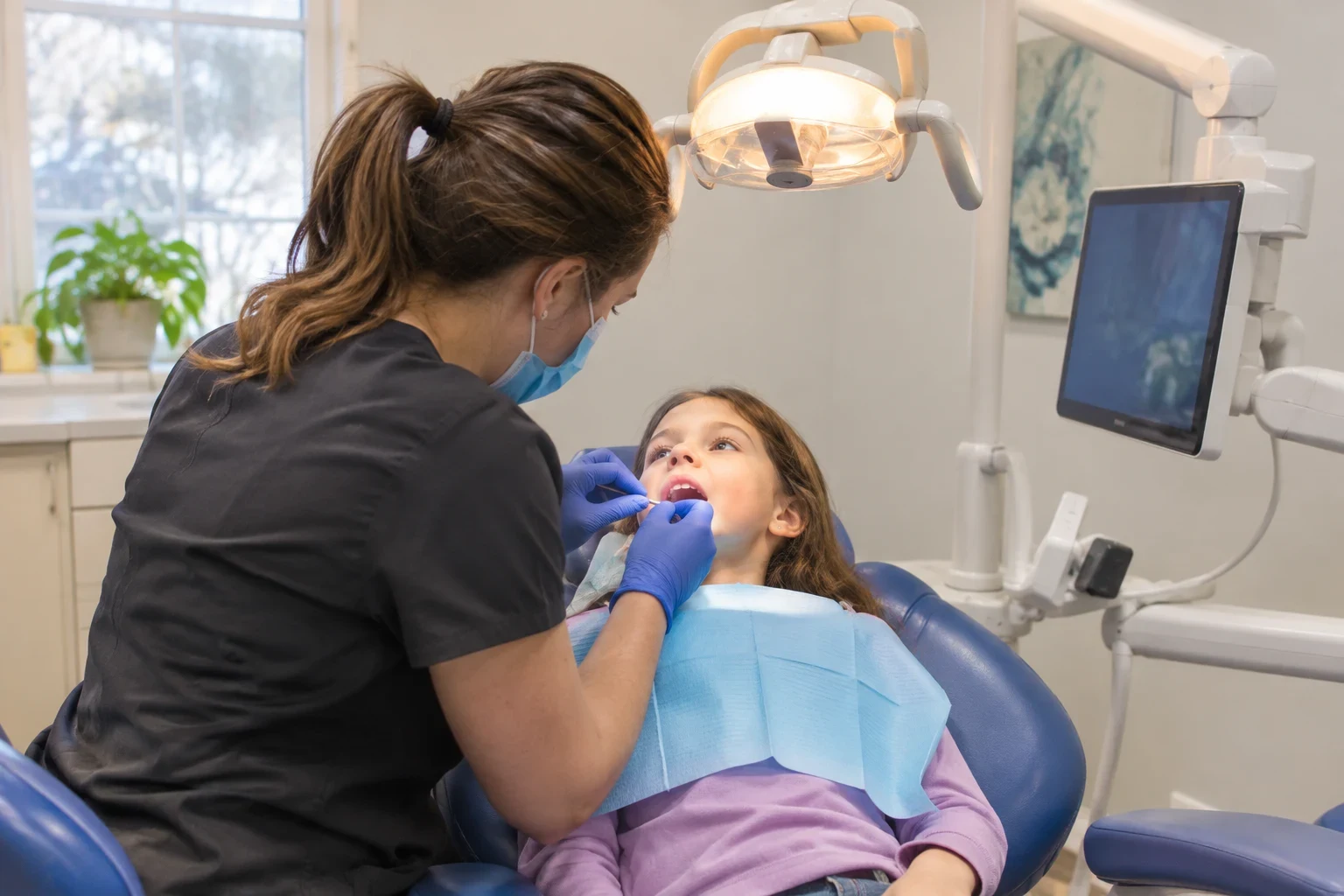
Protecting baby teeth and the adult teeth that follow
Primary teeth have a thin shell. Enamel on a baby molar is about half the thickness found on a permanent tooth, so decay can travel from the surface to the nerve in a matter of months. Those back baby molars also reserve room for the premolars that arrive around ages 10 to 12. When one is lost too soon, the teeth beside it lean into the gap and the adult teeth can come in crowded.
We aim to find trouble while it is still small and to place preventive work that holds up. Most sealants that fall off were contaminated by saliva after the enamel was etched. Most fillings that leak at the margin were rushed during the adhesive step. In practice over 11 years, we keep coming back to those same details: a dry tooth, a checked bite, and a child calm enough to sit still because we told them what was coming.
What a kids' visit covers
Exam and growth check
We look at every tooth surface, the gums and the bite, and we note how the jaws are developing. We also watch for habits like thumb sucking that can push front teeth forward.
Cleaning and fluoride varnish
A gentle polish removes plaque and stain. We then paint on fluoride varnish, which sticks to the enamel for several hours and helps harden early soft spots before they turn into cavities.
X-rays only when they add information
Small bitewing films show decay hiding between back teeth, where kids get cavities a mirror cannot see. How often we take them depends on your child's cavity risk, not a fixed calendar.
Sealants on permanent molars
The chewing surfaces of molars have deep grooves that trap food. We clean and etch the groove, isolate the tooth so it stays completely dry, then flow in a thin resin and cure it with light. A dry field is the single biggest factor in how long a sealant lasts.
Fillings for baby and adult teeth
We use tooth-colored composite or glass ionomer depending on the size and spot of the cavity. Larger decay on a baby molar may need a stainless steel crown, which covers the whole tooth until it falls out naturally. See our Fillings page for more on materials.
Coaching for parents
We show you where plaque is building up and how to angle the brush and floss for your child's age. Small changes at the sink often matter more than anything we do in the chair.
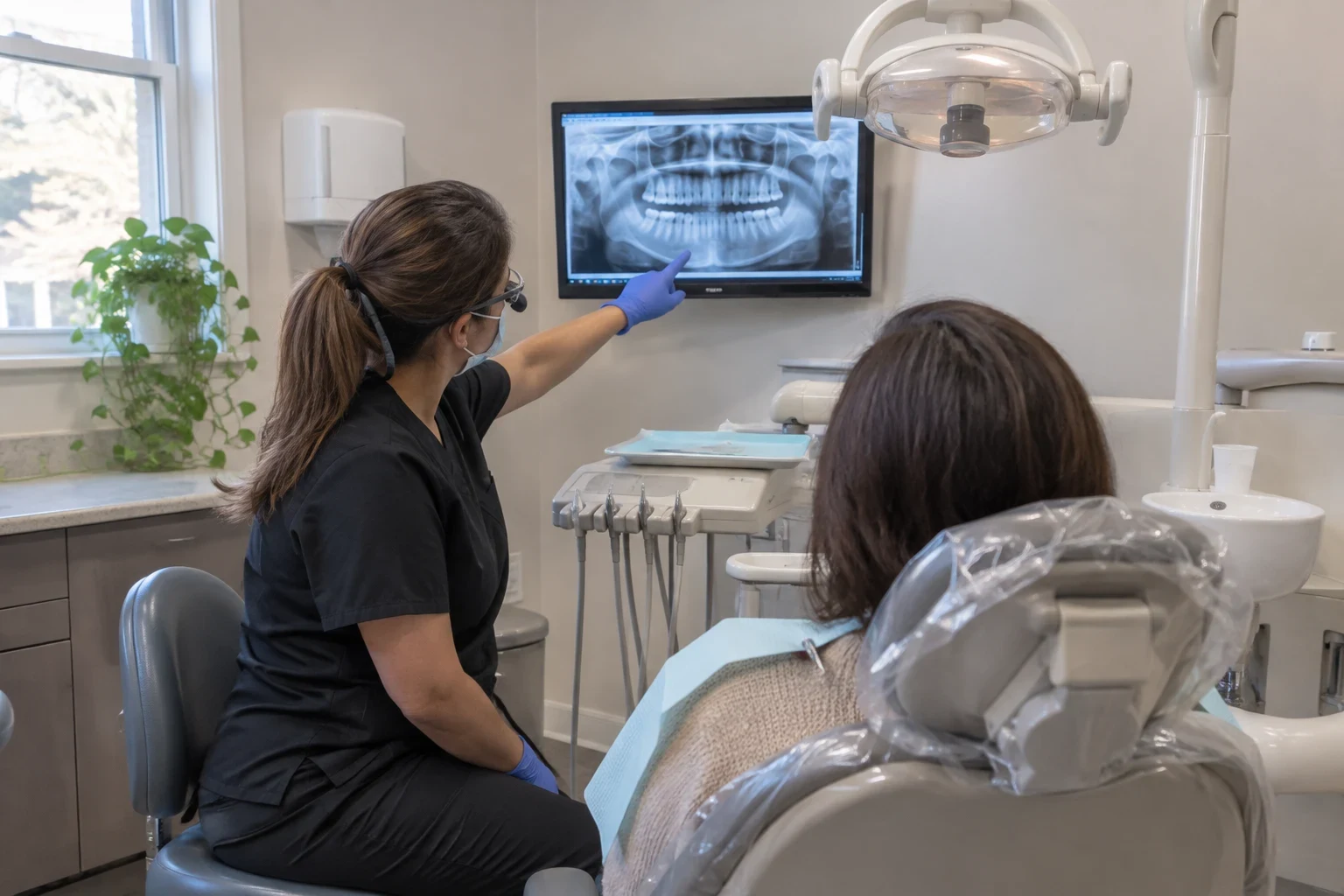
When your child's teeth need a closer look
- White chalky patches or brown spots
- Dull white areas along the gumline mean enamel is losing minerals. Brown or gray marks in the grooves of back teeth often mean a cavity has begun.
- Pulling back from cold drinks or candy
- In children, that reaction usually signals a cavity, a crack or thinned enamel. Many kids never say anything, so notice if they start chewing only on one side.
- Food that keeps getting trapped
- Floss that frays in one spot, or food that lodges in the same place after every meal, can mean decay has opened a space between two molars.
- Bleeding during brushing
- Plaque left along the gumline irritates the tissue until it bleeds. A professional cleaning plus a few changes to brushing technique usually settle it.
- Two rows of front teeth
- Sometimes a permanent lower incisor pushes through behind a baby tooth that never got loose. We decide whether the baby tooth will still shed by itself or should be removed through our Extractions service.
What happens at your child's appointment
- 1
A phone call to plan the visit
Let us know how old your child is, what concerns you, and whether they have seen a dentist before. That tells us how much chair time to set aside.
- 2
Tell, show, then start
Your child gets to see and touch the mirror, the air tip and the polisher before any of them go near a tooth. Parents are welcome to stay right beside the chair.
- 3
Cleaning, exam and films if needed
We polish the teeth, check every surface, take X-rays when they are due and finish with fluoride varnish. Any decay we find, we point out to you on the screen or in the mirror.
- 4
Your written treatment plan
The plan lists each tooth involved, the material we suggest and our reasoning. It also sorts what should be treated soon from what we can safely monitor.
- 5
Treatment in shorter sessions
Sealants and fillings often go on a separate day so a young child is not asked to sit too long. A relaxed child holds still, and that lets us keep the tooth dry and the material well sealed.
What moves the cost of your child's dental care
Checkups, cleanings and fluoride make up most children's visits, and many plans treat that preventive care generously. Costs rise once a visit turns into treatment, which is why you get a written plan before we start any work. Families with coverage will find we accept most dental insurance plans. Without coverage, our Office Dental Plan for patients without insurance can help, and the CareCredit Patient Payment Plan lets you spread larger treatment over time.
- What your plan covers
- Insurance plans set their own limits on cleaning frequency, X-rays and fluoride, and some stop covering sealants after a certain age. We look up your benefits ahead of time so the numbers make sense before you sit down.
- Whether X-rays are due
- A visit that includes bitewing films costs more than one that does not. We schedule films around your child's cavity risk, so a low-risk child may go longer between them.
- How many teeth and surfaces need work
- Decay on one chewing surface is a smaller job than a cavity that spreads into the contact between two molars. Sealants are charged tooth by tooth.
- Which restoration fits the tooth
- Composite resin, glass ionomer and stainless steel crowns suit different cavity sizes and locations, and each has its own fee. Your plan explains why we picked the one listed.
Parents' questions about kids' dentistry
- What age should my child first see a dentist?
- A good time is soon after that first tooth breaks through the gum, and before your child turns one. The visit is short: we take a quick look in the mouth and talk with you about brushing, bottles and fluoride. The bigger payoff is that your child gets to know us long before any treatment might be needed.
- Is it worth filling a baby tooth that will come out later?
- Usually, yes. The back baby molars tend to stay in place until around age 10 to 12. Left alone, decay in them can lead to pain, infection and early loss, and a missing molar lets nearby teeth tip into the gap. A filling keeps the tooth comfortable and holds room for the adult tooth underneath.
- How long will my child's sealants protect their molars?
- A sealant placed on a clean, completely dry tooth can keep protecting the grooves for several years. We inspect every sealant at each cleaning and repair any edge that has worn or chipped. Most early failures trace back to moisture during placement, so that step gets our full attention.
- How do you help a child who is scared of the dentist?
- We name each instrument in simple words and let your child touch the mirror or feel the air tip on a fingertip first. Early visits stay short, and breaks are fine whenever they are needed. If treatment is involved, we can divide it into smaller appointments.
- How much radiation do children's dental X-rays involve?
- Very little. The digital sensors we use need only a small exposure, and your child wears a lead collar over the thyroid. We order films only when a mirror cannot answer the question, most often to check the tight contacts between back teeth.

Give your child a good start with their teeth
A short, calm visit now can head off fillings later. Call to set a time that fits school and your schedule.