ServicesFillings
Fillings in Paxton
A filling only lasts as long as its edges stay sealed. We remove the decay down to sound tooth, keep the area dry, bond tooth-colored composite in thin layers and check your bite before you leave, so the repair holds up to years of chewing.
What a filling does and when it is the right repair
A cavity is a hole that bacteria have dissolved through enamel and into the softer dentin below. A filling takes out that infected tooth structure and replaces it with material that closes the opening, so bacteria cannot keep tunneling toward the nerve.
A filling makes sense when the cavity is limited and the tooth still has thick, sturdy walls around it to hold the new material. When decay has snapped off a cusp or hollowed out most of the tooth, a filling can crack under the force of chewing. In that case we will tell you so and explain why a crown is the stronger choice. Our Crowns & Bridges page covers that option.
Most failed fillings we see did not break in the middle. They leaked at the edge, where a small gap let fresh decay start underneath. That is why our attention goes to the margins, the bond and the bite, the details that decide whether a filling lasts.
What goes into each filling
Decay removed to sound tooth
We clean out soft, stained dentin until the walls are firm and healthy. Leaving decay under a filling is the most common reason it fails early.
A dry working field
Composite bonds poorly to a wet surface, and even a little saliva weakens the seal. We isolate the tooth with cotton, suction and, where it fits, a rubber dam before bonding.
Bonding and thin layers
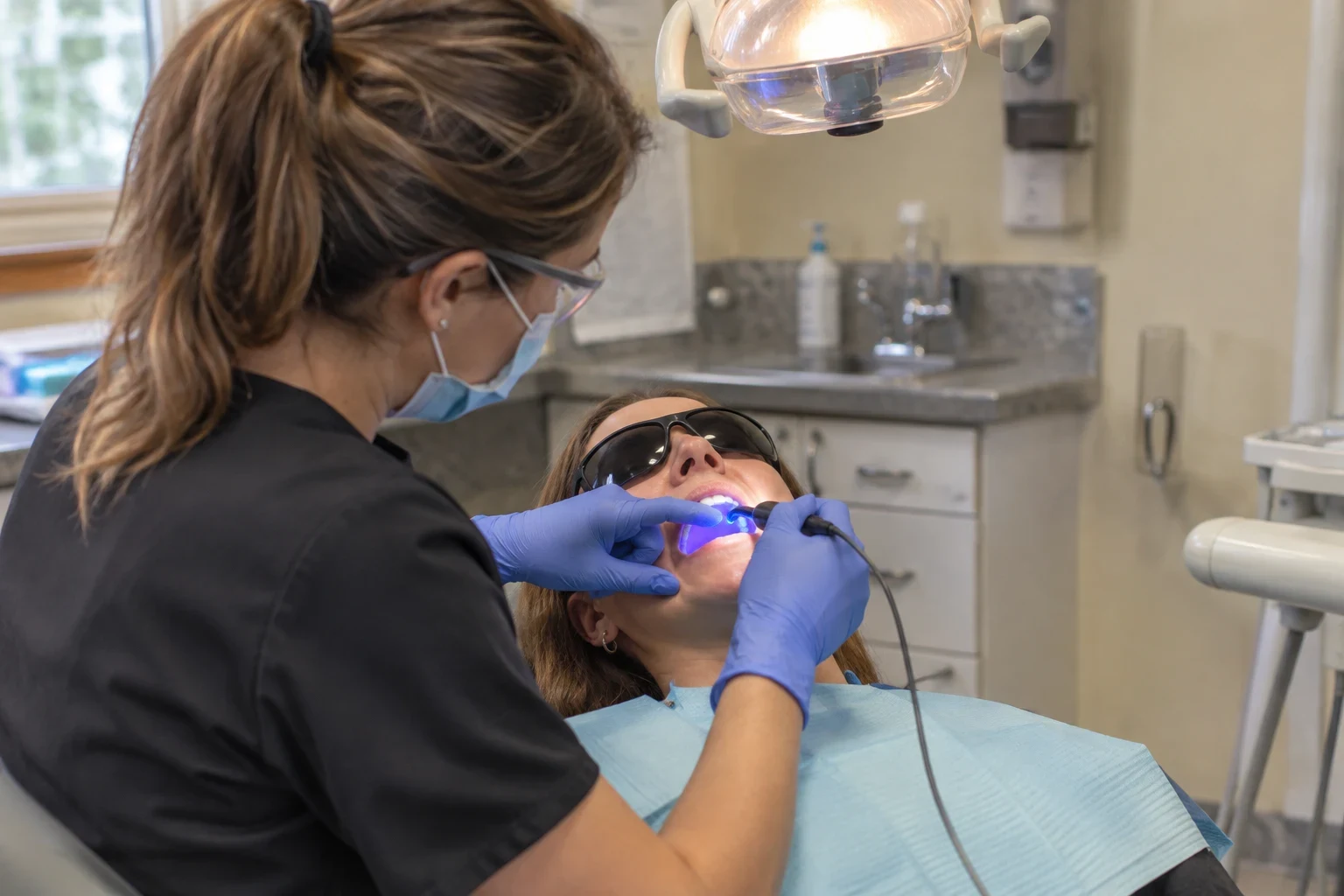
The tooth is etched and coated with a bonding agent, then composite goes in a couple of millimeters at a time. Each layer is light-cured on its own, which limits shrinkage stress that can pull the material away from the walls.
Shade matching
We pick a composite shade against your natural tooth in good light before the area dries out, since dry enamel looks lighter than it really is.
Bite check and polish
Using marking paper, we find and adjust any high spots so the filling does not take more force than the teeth around it. The margins are then smoothed and polished so plaque has less to cling to.
When a tooth is asking for a filling
- A zing from cold drinks or candy
- A brief, sharp twinge from ice water or something sugary often means decay has reached the dentin, the layer that passes signals toward the nerve.
- A dark spot or visible hole
- Brown or gray patches in the grooves, or a rough spot your tongue keeps finding, can be an active cavity. Some stains are harmless, and an exam sorts out which is which.
- Food packing between teeth
- When floss frays or food keeps lodging in the same gap, a cavity may be wearing away the contact between two teeth.
- An old filling with a dark edge
- A shadowy line around an older filling can mean its seal has opened and decay is creeping underneath. Replacing it early usually keeps the repair small.
- Pain when biting
- Pain while chewing can come from a cracked or leaking filling. It can also signal a deeper problem, so we take an X-ray before choosing a repair.
How your filling appointment runs
- 1
Look and confirm
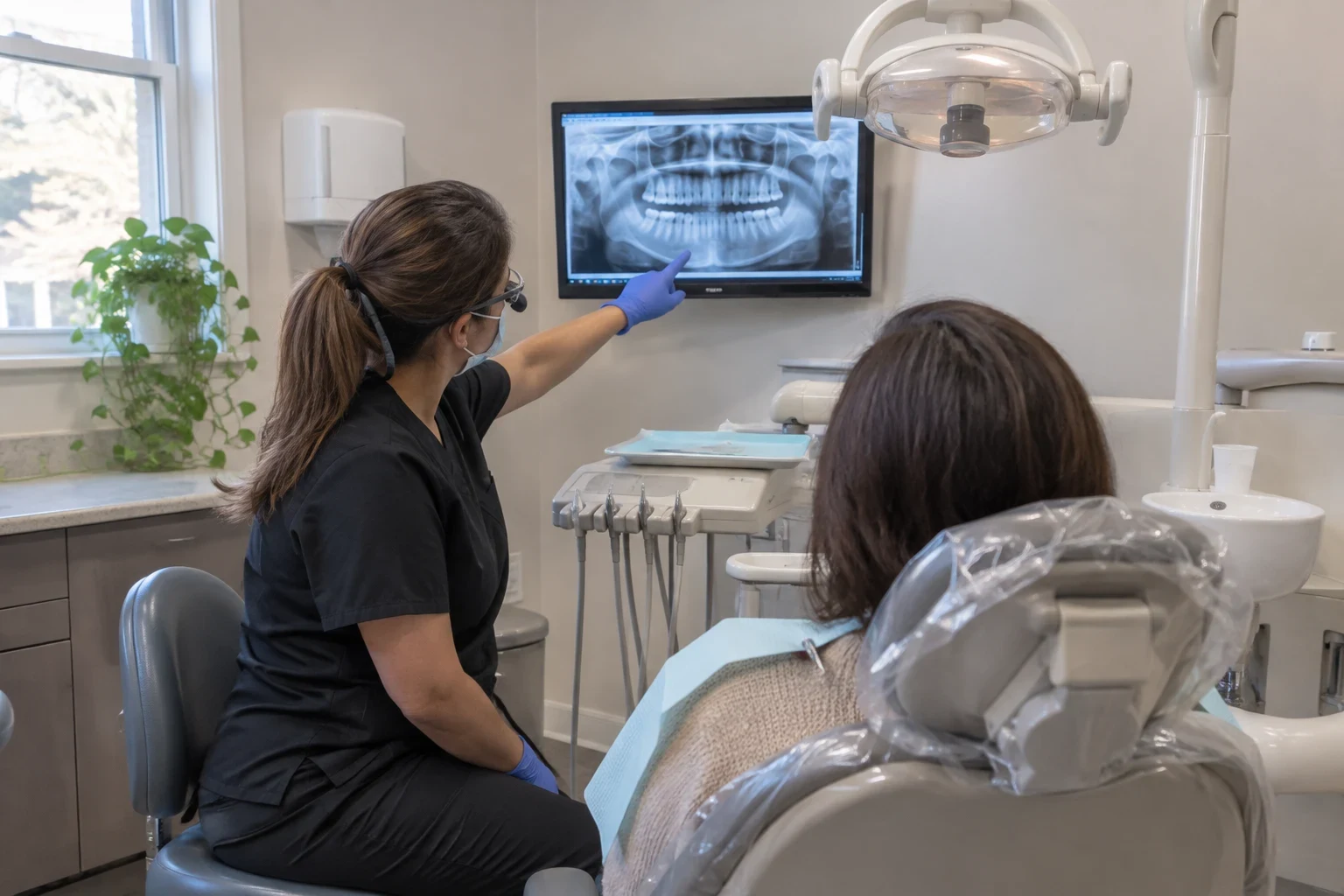
We review your X-rays and examine the tooth, then explain what we found and how large the repair is likely to be. You hear the plan before anything starts.
- 2
Numb and isolate
A local anesthetic numbs the tooth and the gum next to it. Once you are comfortable, we isolate the area to keep it dry.
- 3
Clean and shape
We remove the decay and any old, failing material, then shape the opening so the composite has firm walls to bond against.
- 4
Bond, layer and cure
For cavities between teeth, a thin band shapes the side wall so the new filling makes a tight contact with its neighbor. The composite is built up in layers and cured with a blue light.
- 5
Adjust and finish
We check your bite, smooth the edges and polish the surface. Numbness usually wears off within a few hours, and you can eat on the tooth once it does.
What affects the cost of a filling
How much tooth we have to rebuild sets most of the fee. We go over the cost with you before any work starts. Most dental insurance plans are accepted at our office. If you have no coverage, ask about our Office Dental Plan, and the CareCredit Patient Payment Plan is available when you would rather pay over time.
- Number of surfaces
- Each tooth has a chewing surface plus several sides. A filling that covers one small surface needs less time and material than one that wraps around two or three.
- Tooth location
- Molars at the back are harder to reach and harder to keep dry, and a filling between two teeth needs a band to rebuild the contact point. Both add time in the chair.
- Replacing old work
- Drilling out an existing filling and then clearing the decay hiding under it usually takes longer than treating a new cavity.
- Depth of the decay
- When a cavity reaches close to the nerve, we may place a protective liner beneath the composite first, which adds a step to the visit.
Questions about fillings
- Will getting a filling hurt?
- We numb the tooth first, so most patients feel pressure and vibration rather than pain. We give the anesthetic enough time to take full effect and test the area before starting. If anything feels sharp during the visit, raise a hand and we stop right away.
- How long does a filling take?
- A small filling often takes well under an hour, numbing time included. Bigger fillings, or several done in one visit, run longer, and we give you a time estimate when you book.
- Can you replace my old silver fillings?
- Yes, if the old amalgam has a crack, a gap at its edge or new decay forming next to it. Age alone is not a reason to remove one; a silver filling that still seals tightly can stay in place. We show you what we find and tell you plainly whether it needs to come out.
- Why does my tooth feel sensitive after a filling?
- Mild sensitivity to cold or pressure for a week or two is normal, especially after a deep filling. If the new filling seems to touch first when you bite, the bite likely needs a small adjustment, which takes only a few minutes. Sensitivity that keeps getting worse should be looked at.
- How long do fillings last?
- That depends on the size of the filling, the way you bite and how clean the edges stay. Careful layering and a properly adjusted bite give it the best odds, and regular exams and cleanings let us spot a weak edge early. In over 11 years of practice, we have found the longest-lasting fillings share those same details.

Get that cavity sealed before it grows
Treating a small cavity now usually spares the tooth a larger repair later. Our office sees patients from Paxton as well as Holden, Rutland and the surrounding area.