ServicesTeeth Whitening
Teeth Whitening in Paxton, MA
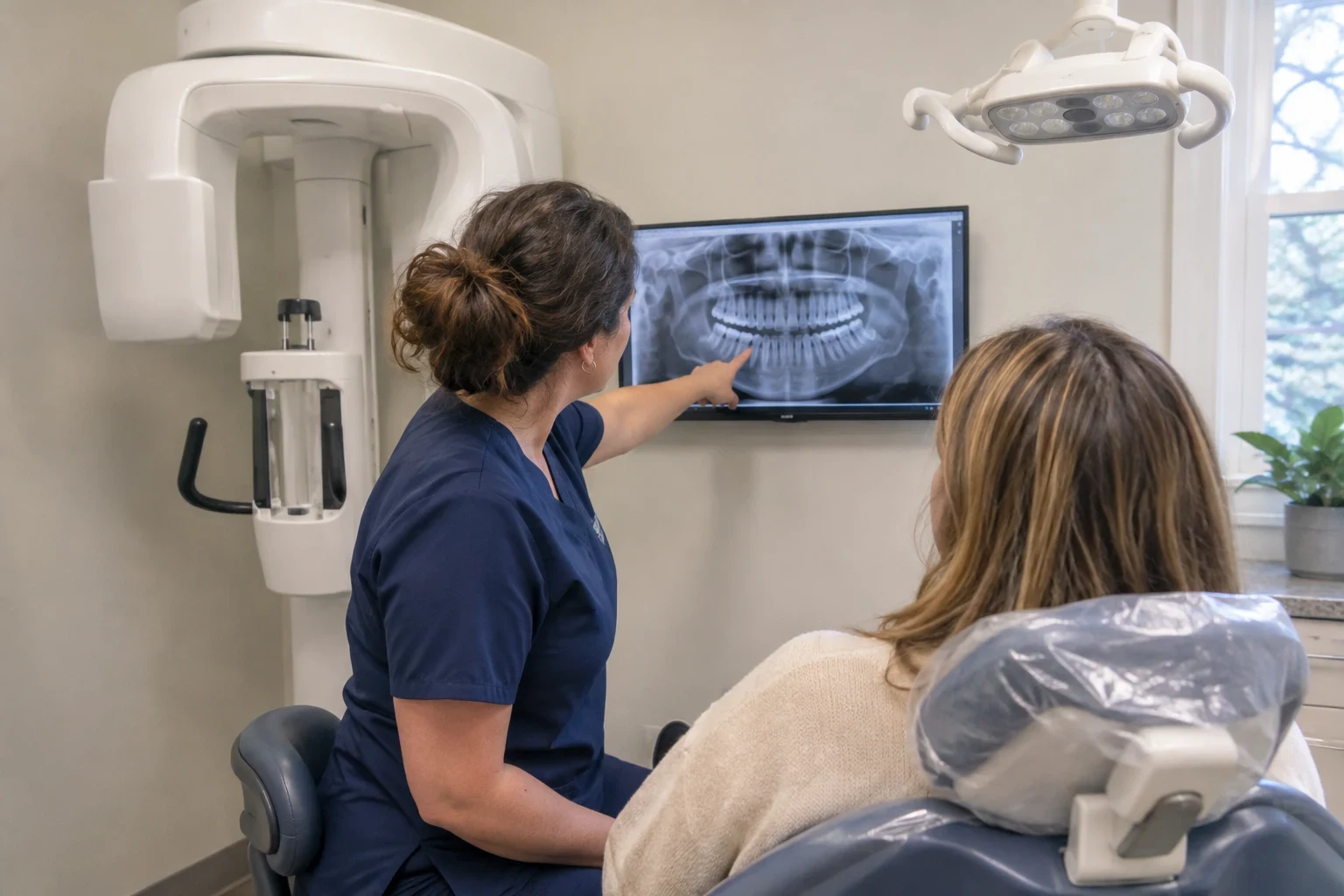
We whiten teeth with professional-strength peroxide gel, trays shaped to your own teeth and a recorded starting shade, so you can see the real change and keep it. Before any gel goes on, we check for cavities, worn enamel and older dental work that will not bleach.
What whitening changes, and what it can't
Whitening gel uses hydrogen peroxide or carbamide peroxide. It breaks down into oxygen that passes through the enamel and lightens the stain molecules inside the tooth. It works best on yellow and brown staining from coffee, tea, red wine, tobacco and ordinary aging. Gray staining from certain antibiotics taken in childhood, or a single tooth that darkened after an old injury, responds more slowly and sometimes needs a different approach.
Peroxide does not change porcelain, composite fillings or crowns. If you have bonding on a front tooth, it will stay the shade it is today while the teeth around it get lighter. We map that work at the start, and we talk through whether a restoration should be updated once whitening is finished.
Our office has been in practice over 11 years, and the whitening results that hold up longest come from small details handled first: a clean tooth surface, a tray edge that keeps gel off the gums, and a target shade your teeth can actually reach.
What your whitening includes
An exam before any bleaching
We check for decay, cracked enamel, receding gums and exposed root surfaces. Peroxide on an open cavity or a bare root causes sharp sensitivity, so those spots are treated first, often with a filling.
A cleaning down to bare enamel
Tartar and surface film block the gel. Cleaning first lets the peroxide reach the enamel evenly, so the color comes out uniform instead of blotchy near the gumline.
A recorded starting shade
We match your teeth against a shade guide and photograph them under the same light at the start and the finish. You see the measured change rather than guessing from a bathroom mirror.
Custom-fit trays
Trays are formed from impressions of your teeth. A close fit holds a thin, even layer of gel against each tooth and keeps it off the gums, which is the usual cause of white, irritated patches along the gumline.
Gum protection in the chair
For in-office whitening, a light-cured barrier is painted along the gumline before the stronger gel goes on. It sets firm in seconds and peels away cleanly afterward.
A sensitivity plan
Some patients feel brief zings during the first few days. We may suggest a potassium nitrate or fluoride gel in your trays between sessions to calm the nerve response.
Signs whitening is worth a conversation
Coffee and tea have built up
Yellow-brown staining that deepened over years usually responds well, because those stains sit inside the enamel where peroxide can reach them.
Store-bought strips stopped working
Flat strips don't follow the curve of every tooth, so the edges and the spaces between teeth often stay darker. A fitted tray covers those areas.
You're planning a new crown or bridge
Porcelain is matched to your tooth shade on the day it's made. If you want whiter teeth, whiten first and match the crown afterward so you don't end up with one tooth brighter than the rest. Our Crowns & Bridges page explains that timing.
Your aligner treatment just finished
Straightened teeth often show staining that used to hide in the overlaps. Whitening after Invisalign or clear aligners evens out the color across the new arch.
One tooth is darker than its neighbors
A single gray tooth can mean the nerve inside changed after an old knock. We check it with an x-ray before any whitening, because the cause decides the treatment.
How whitening works from first visit to final shade
- 1
Exam, x-rays and shade record
We look for anything peroxide could aggravate, note every crown and filling in the smile zone, and record your starting shade with photos. Then we tell you what shade is realistic for your enamel.
- 2
Cleaning and impressions
Your teeth are cleaned so the gel contacts bare enamel. If take-home trays are part of the plan, we take impressions and trim the finished trays just short of the gumline.
- 3
Whitening sessions
For chairside whitening, we seal the gumline with the protective barrier before any gel touches your teeth, then apply it in short, timed stages and check in with you about sensitivity between each one. With take-home trays, you place a small bead of gel for each tooth, wear them for the time we set, and cut back if your teeth feel tender.
- 4
Final shade check
We compare against the starting photos and shade tab. If any older fillings or bonding no longer match, we talk about replacing them now that your new shade is stable, usually after about two weeks.
What affects the cost of whitening
Your cost depends on which whitening method suits your teeth and how much needs attention before any bleaching begins. Insurers usually treat whitening itself as cosmetic, though the exam and cleaning that come first are often covered, and our office accepts most dental insurance plans. The CareCredit Patient Payment Plan lets you spread the cost over time, and patients with no coverage can ask about our Office Dental Plan when they call.
- In-office or take-home
- A chairside session involves stronger gel, gum barrier material and time in the chair. Take-home whitening relies on custom trays and gel you wear over a couple of weeks.
- Type and depth of staining
- Surface stain from coffee lifts faster than deep gray or antibiotic staining. Those darker cases can take more gel and extra sessions before the shade settles where you want it.
- Work needed first
- Cavities, exposed roots or tartar must be dealt with before whitening starts. That treatment belongs to your overall plan and is often billed to insurance on its own.
- Restorations that may need replacing
- Front-tooth fillings or crowns that no longer blend with your new shade can be redone once whitening is complete. This step is optional, and we price it separately.
- Touch-up gel
- Once your trays are made, keeping your shade later means buying gel refills rather than repeating the whole process.
Common whitening questions
Something not covered here? (508) 938-8969
Does whitening cause tooth sensitivity?
It can, for a few days. Peroxide temporarily speeds up fluid movement inside the microscopic tubules of the dentin, and some patients notice quick twinges as a result. The feeling goes away after whitening ends. Spacing sessions apart and wearing a desensitizing gel in your trays usually keeps it mild, and if your teeth are already sensitive, mention it at the exam so we can begin with a lower concentration.
How long do whitening results last?
Results fade gradually, and how fast depends mostly on what you eat, drink and smoke. Coffee, tea and red wine bring stains back sooner. Keeping your trays and doing short touch-ups every so often holds the shade well, and regular exams and cleanings remove surface stain before it settles in.
Will whitening change the color of my crowns or fillings?
No. Porcelain and composite resin don't respond to peroxide, so they keep their current shade while natural teeth lighten. That's why we note every restoration before starting. If one stands out afterward, we can replace it to match your new shade.
Is professional whitening safe for my enamel?
Used as directed, peroxide whitening doesn't dissolve or thin enamel. The risks come from gel sitting on the gums, whitening over an untreated cavity, or overusing strong products. Our exam, fitted trays and gum barrier address each of those.
Can my teenager have their teeth whitened?
We usually wait until the permanent teeth are fully in and the nerve chambers inside them have matured, because younger teeth are more prone to sensitivity. We decide case by case at an exam. Often a good cleaning removes more staining than parents expect.
Start with an exam and a shade check
We'll look at your teeth and any existing dental work, record your starting shade and recommend the whitening method that fits. Your appointment is set up by phone.