ServicesInvisalign / Clear Aligners
Invisalign and Clear Aligners in Paxton
Clear aligners straighten teeth through a sequence of thin removable trays, each one nudging selected teeth a tiny step forward. We map every movement, place the small grip points precisely and check how each tray seats at your visits, so your teeth finish where the plan says they will.
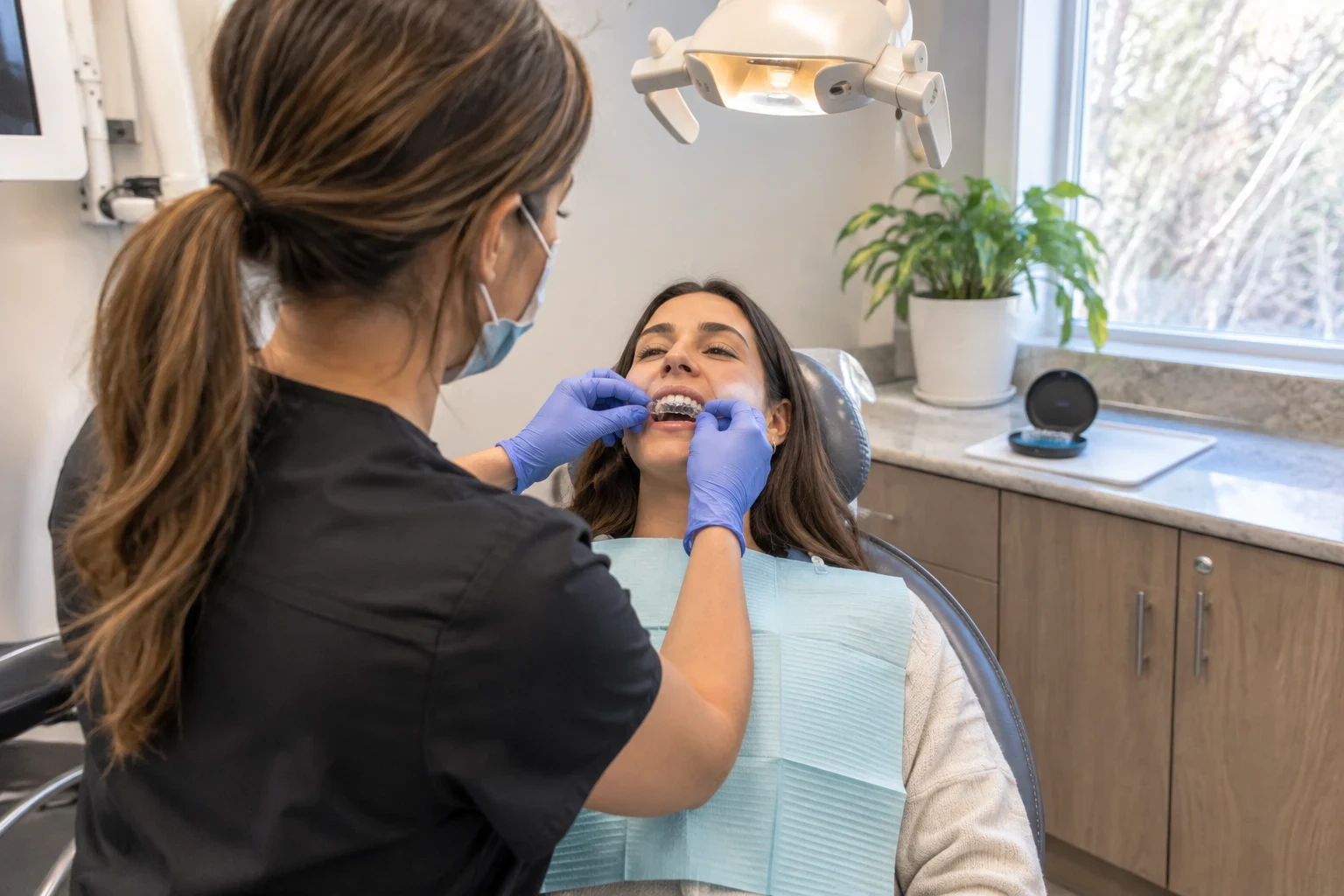
How clear aligners move teeth
Every tray is made a little ahead of your teeth's current position. Worn 20 to 22 hours a day, it presses lightly and constantly, and the bone around each root reshapes as the tooth shifts. After a set interval you move on to the next tray.
Most people credit the plastic, but the small steps decide whether teeth keep pace. How accurately the composite attachments are shaped and placed, whether tightly touching teeth get a little room, and whether each new tray seats all the way down all matter. A tray that sits even slightly above a tooth stops pushing it. In practice over 11 years, we have learned to watch those points closely, because they separate a case that finishes from one that stalls in the middle.
Teens and adults with crowded or gapped teeth, or with a bite that is off by a modest amount, are usually good candidates for trays. Teeth that are turned sharply in the socket, or a bite that has to shift a long distance, can be better served by another approach. If that applies to you, you hear it from us at the first appointment rather than halfway through treatment.
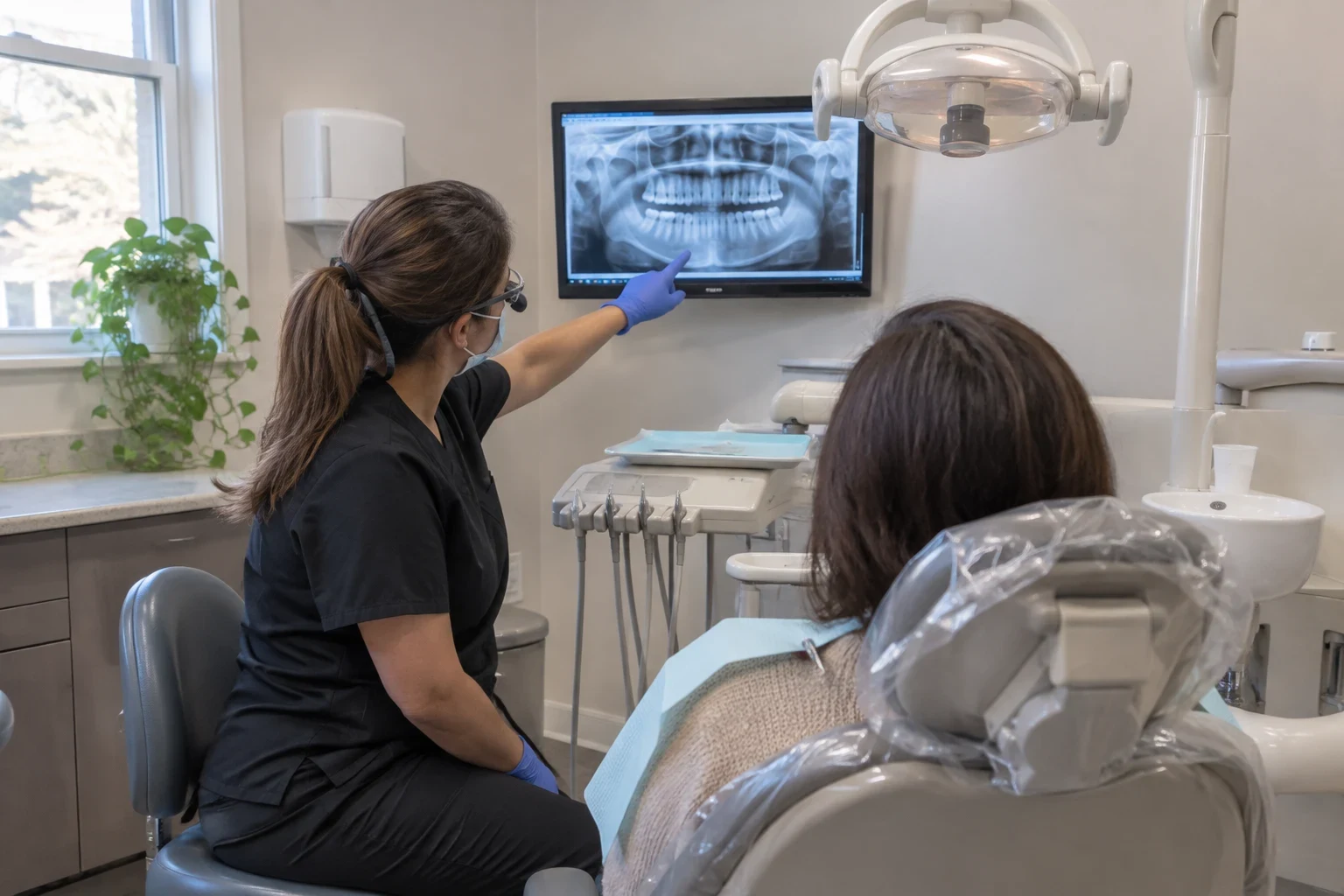
What comes with your aligner treatment
- 01
Exam and records
We look at your teeth, gums and any existing dental work, take X-rays, and capture digital scans or impressions of both arches plus photos. Decay or gum inflammation is treated first, because moving teeth on an unhealthy foundation creates new problems.
- 02
A plan you can preview
A 3D model shows how each tooth should move and about how many trays it will take. We flag the teeth that tend to resist movement and explain the reason.
- 03
Attachment placement
Attachments are small, tooth-colored composite bumps that give the tray something to push against. Each tooth is cleaned and etched, then the composite is shaped through a template and cured with a light, so every bump sits exactly where the plan puts it.
- 04
Room for tight teeth
Some plans use interproximal reduction, a light smoothing of enamel between teeth measured in tenths of a millimeter. Timed correctly, it lets crowded teeth straighten without leaning.
- 05
Fit checks and refinements
Each check looks for air gaps between tray and tooth, worn or missing attachments, and teeth lagging behind. If a few teeth need more work near the end, refinement trays finish them.
- 06
Retainers
Freshly moved teeth want to return to where they were. A retainer holds them while the surrounding bone firms up.
Questions about Invisalign / Clear Aligners?
Call(508) 938-8969When clear aligners make sense
Overlapping front teeth
Where teeth overlap, plaque builds up in spots a brush and floss miss, raising the odds of decay and gum disease between them.
Spaces that trap food
Gaps collect food after meals and can allow the teeth beside them to lean or wander over time.
Chipped or worn edges
When teeth meet at a bad angle they grind on each other. Flattened tips or small chips along the front teeth often trace back to the bite.
Relapse after braces
Teeth commonly drift once a retainer stops being worn. That kind of shifting often responds well to a short aligner series.
Getting ready for a crown or bridge
A tipped tooth sometimes has to be stood upright before a crown or bridge can fit properly. Aligners can make that space first.
Your aligner treatment, step by step
- 1
Consultation and records
At the first visit we check your teeth and gums, gather scans and X-rays, and explain what aligners can and can't correct for you. By the end you know if they are a good fit.
- 2
Reviewing the plan
We walk through the 3D plan together: how many trays, any enamel smoothing, and which teeth carry attachments. Trays are ordered only after you approve it.
- 3
Fitting appointment
We place the attachments, seat your first trays and make sure they click fully into position. You practice putting them in and out, and we cover cleaning and daily wear time.
- 4
Checkups along the way
Every several weeks we confirm the teeth are following the plan, replace any attachments that came off and give you your next sets.
- 5
Wrapping up
When your teeth match the final model, we remove the attachments, polish the enamel smooth and fit your retainers.
What moves the price of clear aligner treatment
The total comes down to how far your teeth have to travel and how many stages that takes. Before anything is ordered, you get a written breakdown of each part of the treatment plan. We accept most dental insurance plans, have an Office Dental Plan for patients without insurance, and work with the CareCredit Patient Payment Plan for financing.
- How much movement is planned
- Straightening two or three overlapped incisors takes a short run of trays. Shifting the whole arch or correcting how the upper and lower teeth meet takes many more, plus extra lab fabrication and visits.
- Chance of a refinement series
- Stubborn teeth sometimes need a second, shorter set of trays at the end. We tell you at the plan review how likely that is for your teeth.
- Treatment needed beforehand
- Cavities, a cleaning or gum care may have to be handled before teeth start moving. That work is billed on its own, apart from the aligner fee.
- Your retainer choice
- Clear removable retainers, a fixed wire behind the front teeth, or a backup set each change the final number.
- What your plan covers
- Some dental insurance includes an orthodontic benefit, often capped by a lifetime maximum or limited by age. We look up your coverage and show where it applies.
Common questions about clear aligners
Are aligners painful?
Expect a snug, pressing feeling for the first day or two of each new tray. That pressure means the teeth are responding. Most patients find it gentler than braces being adjusted, and starting a new tray right before bed helps you sleep through the tightest part.
Do I wear them while eating?
No. Remove the trays for every meal and for any drink besides plain water. Plastic holds sugar and acid against the enamel for hours, so brush, or at least rinse well, before the trays go back in.
How many months will it take?
Light crowding may wrap up in a matter of months. Larger corrections commonly run a year or longer. Daily wear time is the biggest variable, because trays worn only part of the day leave teeth behind schedule and add months.
What should I do if an attachment pops off or a tray cracks?
Let us know by phone so we can replace the attachment or arrange a new tray. Until then we may ask you to step back to the previous tray, which keeps teeth from drifting better than going without.
Will aligners work if I already have crowns or fillings?
In most cases, yes. Composite grips porcelain differently than natural enamel, so we treat the crown surface to match the material before placing an attachment. We also confirm that older fillings are sound before those teeth are moved.

Find out what aligners can do for your smile
At your first visit we examine your teeth, take records and explain your options in plain terms. Patients come to us from Paxton, Holden, Worcester and nearby towns.