How do you clean Invisalign trays? A Paxton patient's guide
Clear aligners are thin, precise plastic, and the way you rinse, brush and store them decides whether each set stays clear and keeps pressing on your teeth the way it was designed to.
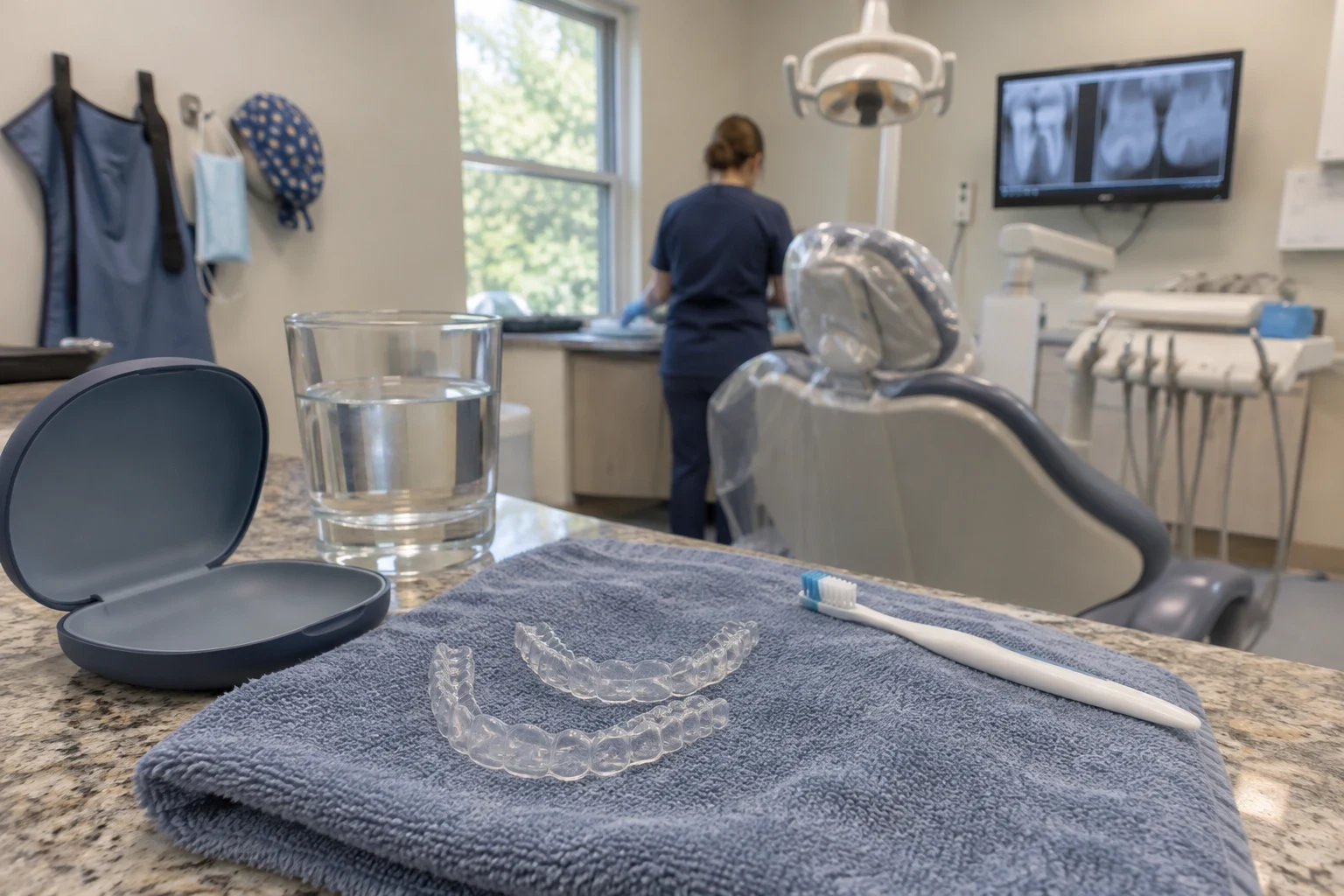
How do you clean Invisalign trays?
Clean Invisalign trays every time you take them out: rinse in cool water, brush gently with a soft brush and clear, unscented soap, then rinse again. Soak them once a day in an aligner cleaner. Skip hot water, toothpaste and colored mouthwash, which warp, scratch or stain the plastic. For an aligner fit check, reach our office at (508) 938-8969.
The daily routine that keeps trays clean
Saliva and plaque start forming a film on the inside of a tray as soon as you put it in. That film is the same biofilm that builds up on your teeth, and the aligner holds it right against the enamel for most of the day. Cleaning at each removal keeps that layer from hardening.
Do this in the morning, at night and any time you take the trays out to eat. It takes about two minutes once it becomes habit.
- Rinse the trays under cool or lukewarm running water as soon as they come out, so saliva does not dry on the plastic.
- Brush the inside and outside with a soft toothbrush you keep only for aligners, using a drop of clear, unscented liquid soap.
- Pay attention to the small pockets that fit over attachments and the edges along the gumline, where film collects first.
- Rinse well so no soap taste is left.
- Brush and floss your own teeth before the trays go back in, so you are not sealing food against your enamel.
What damages aligner plastic
Invisalign trays are made from a thermoplastic material. Thermoplastic means it was shaped with heat, and heat can reshape it. Hot tap water, a dishwasher or a cup of boiling water can relax the plastic just enough to change how the tray grips your teeth. You may not see the change, but a tray that has lost its fit stops applying the planned force.
Abrasives are the second problem. Most toothpaste contains fine grit meant to polish enamel. On a soft plastic surface it leaves tiny scratches that scatter light, so the tray turns cloudy, and those grooves give bacteria more places to hold on.
- Hot water, dishwashers and microwaves
- Toothpaste, baking soda scrubs and stiff brushes
- Bleach and strong cleaning disinfectants
- Colored or alcohol-based mouthwash, which can stain and dry the plastic
How to remove cloudy film and white buildup
A daily soak reaches the spots a brush misses. Aligner cleaning crystals or tablets made for clear plastic dissolve in cool water, and a soak of the length printed on the package loosens the film clinging to the surface. Brush lightly and rinse after the soak.
White, chalky spots that do not brush off are usually mineral deposits from saliva, the start of tartar. A short soak in a mix of equal parts white vinegar and cool water softens them, followed by a gentle brush and a thorough rinse. If a tray stays cloudy after that, the haze is likely scratching inside the plastic, and no cleaner will fix it.
Since each set is worn for a limited time, a slightly dull tray near the end of its rotation is normal. A tray that is yellow or smells after a few days usually points to drinks or skipped cleaning.
Why clean trays matter for your treatment
Each aligner is built to press on specific points of specific teeth, often through small tooth-colored bumps called attachments. A tray that is warped, cracked at the edge or packed with residue does not seat fully over those attachments, and the tooth movement falls behind the plan. That is the kind of small detail that decides whether treatment finishes on schedule.
Clean trays also protect your teeth. Sugar or acid trapped under plastic sits on enamel for hours with almost no saliva to wash it away. Only plain water should go in with the trays in place. Coffee, tea, wine and soda stain the plastic and can lead to decay along the gumline, so take the trays out, drink, rinse your mouth and then put them back.
Storing and traveling with your aligners
Most lost or broken trays happen during meals out, when an aligner gets wrapped in a napkin and thrown away. Keep the case with you and put the trays in it every time they leave your mouth. Pets also chew aligners because they smell like you, so the case belongs out of reach.
In a Paxton winter, a case left in a cold car is fine, but in summer a dashboard or glove box can get hot enough to soften the plastic. Carry the case with you instead. Clean the case itself every few days with soap and cool water and let it air dry, since a dirty case recontaminates a clean tray.
More questions about caring for clear aligners
Something not covered here? (508) 938-8969
Can I use denture cleaner on Invisalign trays?
Some denture tablets are strong enough to cloud thin aligner plastic, so a cleaner labeled for clear aligners is the safer choice. If you do use one, keep the soak short and the water cool.
Should I clean the old trays I keep?
Yes. Clean your previous set, let it dry and store it in a labeled bag or case. If a current tray breaks or goes missing, a clean backup can hold your teeth in place until you reach the office.
How can I tell if a tray is damaged?
Look for cracks along the edges, a gap between the tray and your teeth, or a tray that feels loose over the attachments. Call the office before switching to the next set so we can check the fit.
Do I still need regular cleanings during aligner treatment?
Yes. Wearing trays most of the day changes how plaque collects, so regular exams and cleanings matter more during treatment, not less. We also check your attachments at those visits.

Have trays that look cloudy or fit loosely?
Call to set up an appointment. We can check how your aligners are seating, look at your attachments and gumline, and talk through your treatment plan. We accept most dental insurance plans, offer an Office Dental Plan for patients without insurance, and accept the CareCredit Patient Payment Plan.