ServicesExtractions
Extractions in Paxton, MA
If a tooth has split into the root, keeps getting reinfected or is crowding the teeth beside it, removing it may be the sound choice. We lift it out with minimal force on the surrounding bone, then give you a clear healing plan and talk through what fills the space.
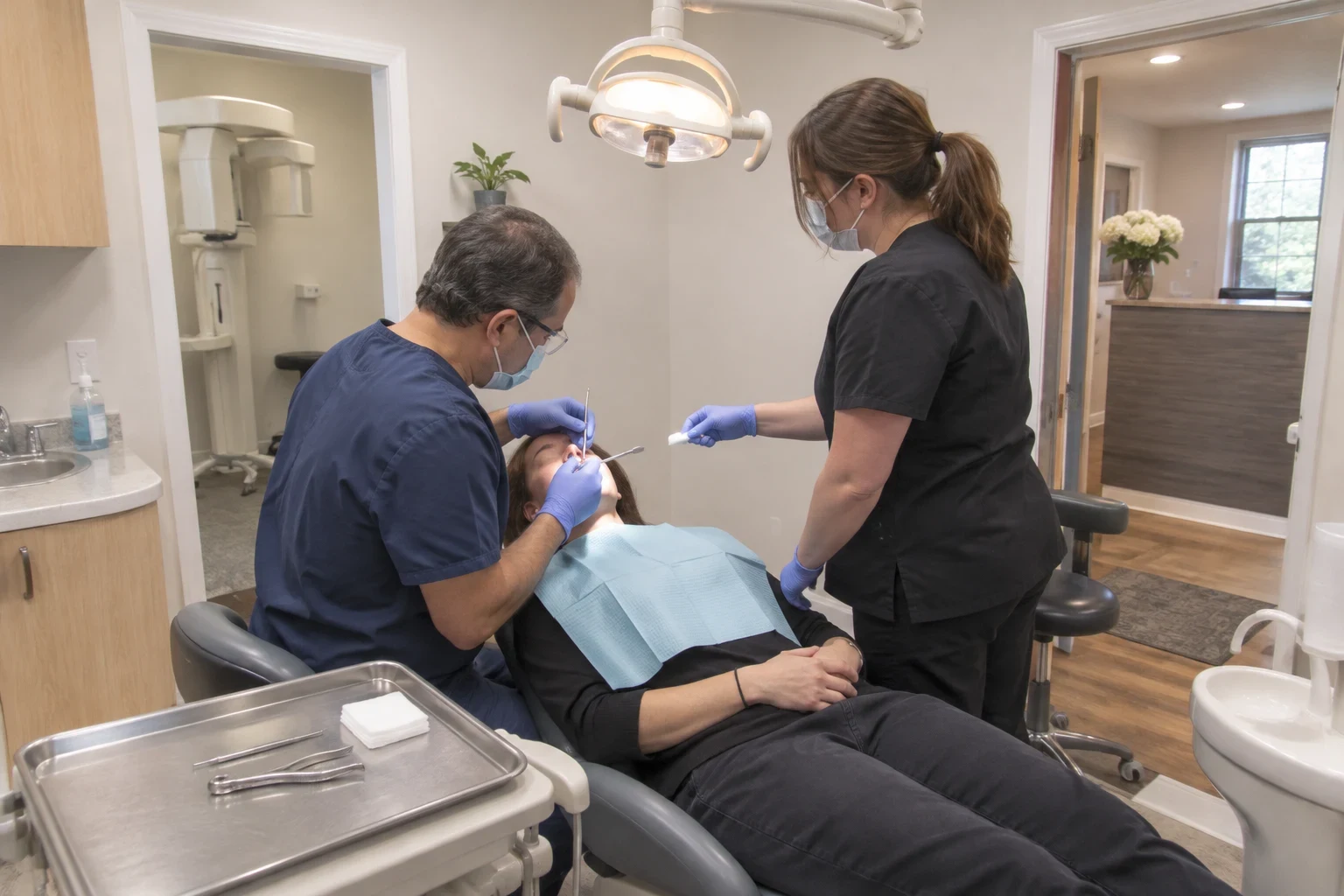
When taking a tooth out is the better choice
We try to save teeth first. A filling or a crown fixes a lot of damage that looks worse than it is. An extraction makes sense when the crack runs into the root, when decay has destroyed too much structure to hold a restoration, when infection keeps coming back, or when a tooth is impacted or blocking others.
How the tooth comes out matters for years afterward. The thin wall of bone around each root, especially on the cheek side, is what supports a future bridge and keeps neighboring teeth from drifting. Rough removal can fracture that wall. We loosen the ligament around the root slowly, divide multi-rooted teeth when needed, and check the socket before we finish. We have been in practice over 11 years, and those small steps are where that experience shows.
What happens during your extraction visit
Imaging comes first
An X-ray shows how long the roots are, how they curve and how near they sit to the sinus or the lower jaw's nerve canal. From that, we know whether the tooth can come out whole or should be sectioned.
Numbing you can confirm
Local anesthetic goes in, and we test the gum and tooth to make sure the feeling is gone before any instrument touches the area. You will notice pressure, but nothing sharp. If something does feel sharp, tell us and we stop and add more.
One root at a time
Many molars have two or three roots that spread outward. Dividing the tooth and removing each root separately loads the bone far less than forcing the whole tooth out at once.
Cleaning and closing the socket
We clear out infected tissue, round off any sharp bone edges, and place gauze or sutures so a firm blood clot can settle in. New bone builds on that clot.
Aftercare in writing
Before you go, we hand you a sheet covering how to manage bleeding and swelling, what to eat and how to keep the area clean. That way the evening after the visit has no guesswork.
When a tooth may be past saving
A twinge as your teeth come apart
Sudden, sharp pain the moment you open from a bite is a classic sign of a cracked tooth. If the fracture extends under the gumline and into the root, it usually cannot be sealed.
A bump or swelling on the gum
A small pimple-like spot beside a tooth usually means an abscess is draining from the root. Some of these can be treated; others mean the tooth has too little left to save.
A tooth that moves
Advanced gum disease eats away the bone that holds teeth in place. Once too much support is gone, keeping the tooth can put the neighboring teeth at risk.
Decay has left only a shell
When all that remains is a thin wall or a root tip, there is nothing sturdy enough to hold a filling or crown.
Crowding or a tooth that will not budge
A baby tooth that hangs on too long, or one blocking an adult tooth from erupting, may need to come out. Our Kids' Dentistry page explains how we handle this with younger patients.
Your appointment, step by step
- 1
Exam and a straight answer
We examine the tooth, take X-rays and tell you directly whether it can be kept. If it has to come out, we explain the reason and the replacement options that fit, such as a bridge.
- 2
Anesthetic and comfort
After the anesthetic goes in, we wait until it has fully set before starting. You hear what each step will feel like before it happens.
- 3
Gentle removal
Fine instruments ease the ligament and widen the space around the root so the tooth can be lifted. Broken or multi-rooted teeth are sectioned first. In a simple case, the removal itself is often quicker than the numbing.
- 4
Guarding the clot
We inspect the socket, place gauze and add a few sutures if needed. Then we cover the first day at home: skip straws and smoking, rinse gently, and eat soft food on the opposite side.
- 5
Checking healing
After a more involved removal, we bring you back to see how the site is closing. If a bridge is planned, we set the timing once the gum has firmed up.
What moves the price of an extraction
Most of the cost comes down to two things: how the roots are shaped and how much of the tooth is still intact. Before any work begins, you hear exactly what the removal will involve. We accept most dental insurance plans. Patients without coverage have our Office Dental Plan, and financing through the CareCredit Patient Payment Plan lets you pay over time.
- Routine versus surgical removal
- An intact tooth that sits above the gum with straight roots is the most direct case. When the crown has snapped off at the gumline, or the tooth is impacted in bone, the removal takes extra steps and more chair time.
- Root count and shape
- Front teeth usually have one root. Molars often have curved or splayed roots that need to be sectioned and lifted one at a time.
- Active infection
- If an abscess is present, the socket needs extra cleaning, and medication may be needed before or after the visit.
- What your plan covers
- Coverage for extractions varies from one insurance plan to the next. When you schedule by phone, we can go over what yours includes.
Common questions about extractions
Something not covered here? (508) 938-8969
Does having a tooth pulled hurt?
Local anesthetic blocks pain while we work, so most patients notice pressure and some sound rather than sharpness. Tenderness afterward is usually strongest over the first two days, then fades. Before you leave, we explain what to take for it.
I have heard about dry socket. How do I prevent it?
Dry socket means the clot that forms in the empty socket has broken down or been pulled loose, leaving bone exposed. Suction is the main culprit, so straws, smoking and forceful spitting are the habits to drop for several days. Following your aftercare instructions closely lowers the risk considerably.
Do I need to replace the tooth?
With a back tooth, an open gap lets the teeth beside it lean in and the tooth above or below creep toward the space, which slowly shifts your bite. A bridge is one replacement we offer, and our Crowns & Bridges page walks through it. We discuss this before removal so the site heals in a way that suits the plan.
Can I return to work afterward?
After a routine removal, plenty of patients head back to a desk job the same afternoon. Lifting and hard workouts raise blood pressure and can start the bleeding again, so give yourself a day or two of rest after a surgical extraction.
What can I eat once the tooth is out?
On the first day, choose soft foods served cool or lukewarm, such as yogurt, scrambled eggs or soup. Chew on the opposite side, and skip chips, nuts and seeded foods that can get packed into the socket.
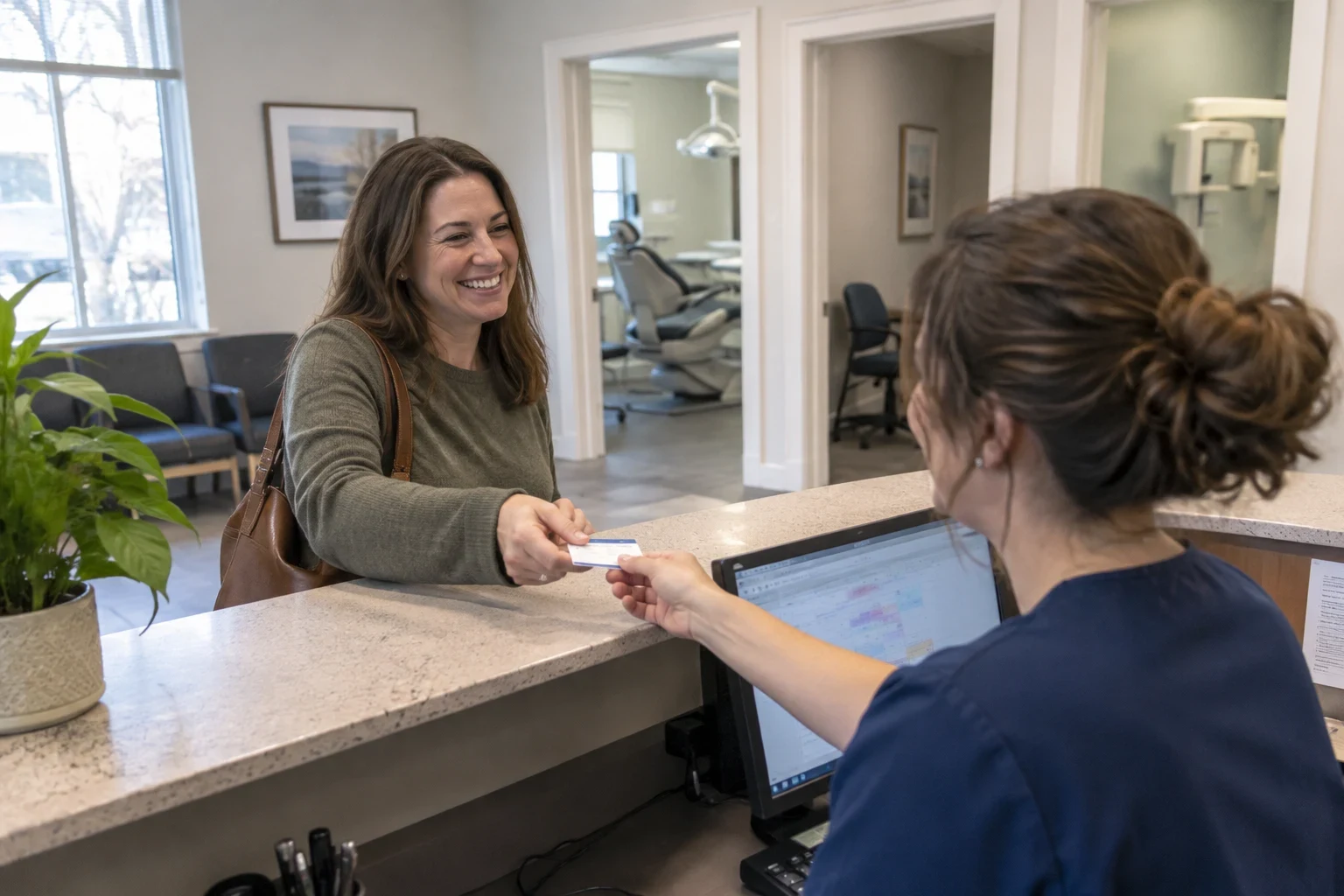
Have a tooth that needs a look
If a tooth is cracked, loose or keeps flaring up, we will check it, tell you whether it can be saved and plan the removal carefully if it cannot. Patients come to us from Paxton, Holden, Rutland and nearby towns.