ServicesExams & Cleanings
Exams & Cleanings in Paxton
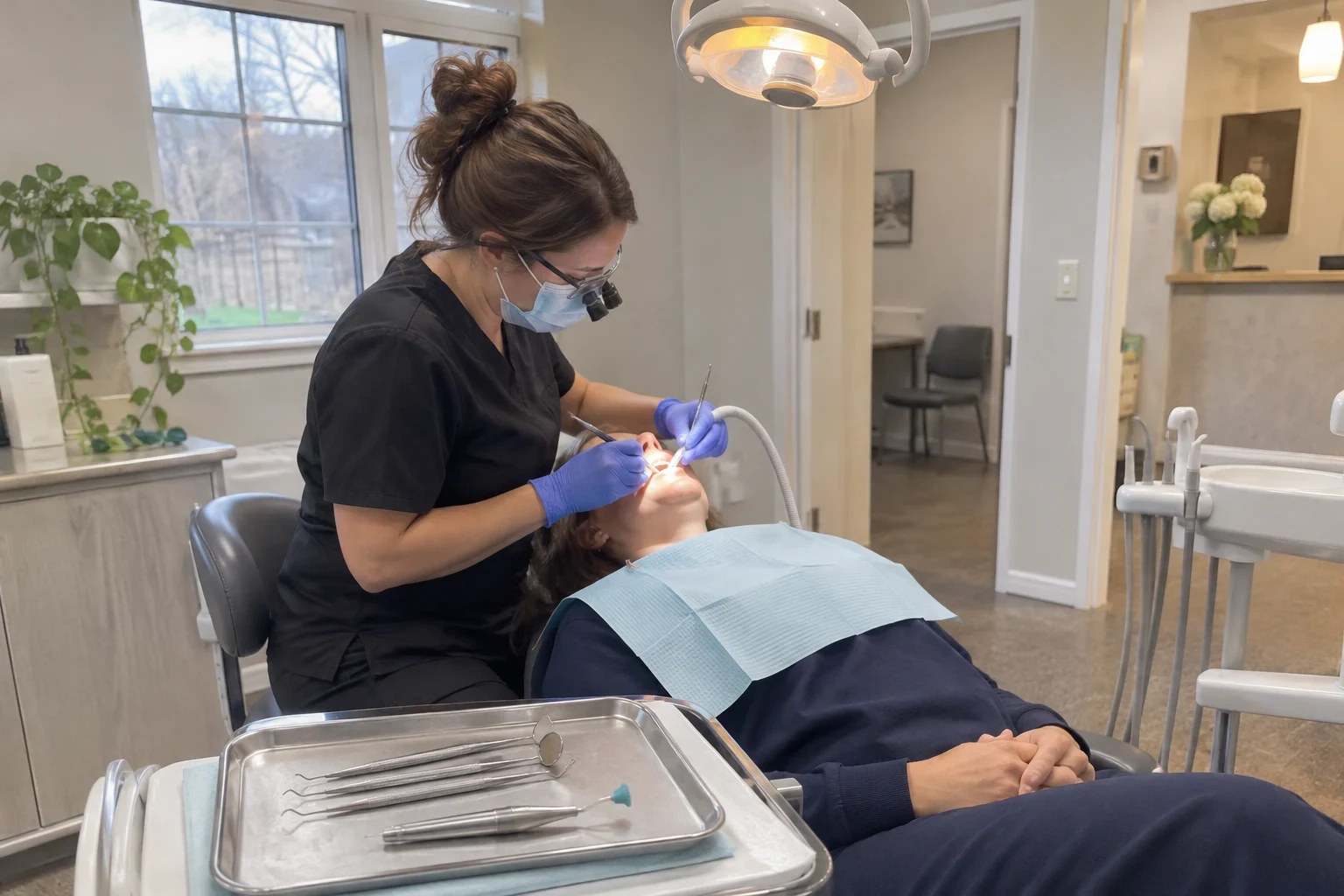
A good checkup catches small problems while they are still small. We measure your gum pockets, check the edges of every filling and crown, and remove hardened tartar above and below the gumline, then explain what we found in plain terms.
What a careful checkup actually looks for
Most dental problems start quietly. A filling margin opens by a fraction of a millimeter, bacteria slip into the gap, and decay grows under the old work with no pain at all. Tartar, the mineralized plaque that brushing can't remove, settles just below the gumline and slowly pulls the gum away from the tooth. An exam and cleaning is where we find these things early.
In practice over 11 years, we have found that a checkup is only as good as its details. That means running an explorer along every crown edge, reading the contact points on each bitewing image, and charting pocket depths so the numbers at your next visit can be compared. Patients from Paxton and towns like Holden, Rutland and Leicester come to us for checkups handled with that kind of attention.
What your exam and cleaning includes
Gum pocket measurements
A slim probe measures the space between gum and tooth at six spots around every tooth. Healthy readings sit around 1 to 3 millimeters. Deeper numbers, or bleeding when the probe touches, signal gum disease and show us where to focus.
Checking existing fillings and crowns
Dental work breaks down at its edges first. We trace each margin for gaps, chips or dark staining that points to leakage, so a worn filling can be replaced before decay spreads under it.
Bitewing x-rays when you need them
These images reveal cavities hiding between teeth and the level of bone around the roots. Your past decay and gum health set the interval for them, so a fixed date on the calendar is not the only guide.
Scaling and polishing
Hand scalers and an ultrasonic tool lift tartar off the enamel and from just under the gumline. A polish then smooths the surface so new plaque has less to grip.
Bite, wear and soft tissue check
We look for flattened or cracked teeth from clenching, and we screen the tongue, cheeks and throat for any spots that need a closer look.
When to book a checkup sooner
Pink in the sink after brushing
Blood on the brush or floss usually means the gums are inflamed by plaque and tartar along the gumline. Treated early, a cleaning and steadier home care often turn it around.
A filling feels rough or catches floss
Floss that shreds on one spot often means a chipped filling edge or a ledge of tartar. Both trap bacteria and are worth fixing soon.
Twinges from cold drinks or sweets
That quick zing may come from gum recession exposing the root or from a small cavity. An exam sorts out which one you are dealing with.
Breath that brushing doesn't fix
Odor that lingers after you brush can come from bacteria settled in deep gum pockets.
Over a year since your last visit
No symptoms does not mean no change. Tartar keeps building and older dental work keeps wearing, and long gaps between visits are how minor problems become major ones.
How your visit runs
- 1
Your phone call
When you call, we set your appointment and go over your insurance or other payment options. New patients can share any recent x-rays from a previous dentist so we don't repeat them.
- 2
History and x-rays
We review your health history and medications, since some affect gums and saliva. Then we take any x-rays that are due.
- 3
Exam and measurements
We probe your gums, chart existing dental work, and check each tooth and your bite. You hear the numbers as we record them.
- 4
Cleaning
We remove tartar and polish your teeth. If your gums are tender, we slow down and can numb an area so you stay comfortable.
- 5
Findings and next steps
We show you anything we found on the x-rays or intraoral photos and explain what is urgent and what can wait. If you need a filling or crown, you get a written treatment plan to review before you decide.
What moves the cost of an exam and cleaning
Preventive visits are among the most predictable in dentistry, but a few factors change how much work a visit involves. We walk you through the expected cost before we begin, and we accept most dental insurance plans.
- What your plan covers
- Many PPO plans pay for preventive exams, cleanings and x-rays at a high rate, often twice a year. We look up your benefits so your share is clear before the visit.
- First visit versus recall visit
- A new patient visit includes a complete exam and a full baseline of records, so it runs longer than a routine recall checkup.
- Which x-rays are needed
- Some patients need bitewings every year, others less often. A full-mouth series is taken at longer intervals, so not every visit includes the same images.
- How healthy your gums are
- When pockets are deep and tartar sits far down the root, a routine cleaning cannot reach it. That calls for scaling and root planing, a separate treatment billed on its own.
- Options without coverage
- If you have no dental insurance, our Office Dental Plan for patients without insurance helps you budget for regular checkups. For larger treatment, we offer the CareCredit Patient Payment Plan to spread out the cost.
Exam and cleaning questions
Something not covered here? (508) 938-8969
How often should I come in?
Twice a year suits most adults. Patients with deeper gum pockets or fast tartar buildup often stay healthier on a three or four month cycle. We set your interval from your own probe readings rather than a blanket rule.
What is the difference between a regular cleaning and a deep cleaning?
A regular cleaning clears plaque and tartar from the crowns of the teeth and the area just under the gumline. A deep cleaning reaches farther down the root in sites with deeper pockets, and we usually numb those areas first. We recommend it only when measurements and x-rays show lost bone or gum attachment.
Will the cleaning hurt if my teeth are sensitive?
The ultrasonic scaler bothers some patients more than others. Let us know and we can warm the water, switch to hand scalers or numb the tender spot. Sensitivity often eases once the tartar is off and the gums calm down.
How much radiation comes from dental x-rays?
Modern digital sensors need only a small exposure to produce a clear image. We schedule them by your risk level instead of taking them every visit. They reveal decay between teeth and changes in bone that an eye or an explorer simply cannot detect.
Can I bring my kids in for checkups too?
Yes. Children get exams and cleanings suited to their age, plus sealants and fluoride when those help. Our Kids' Dentistry page covers how those visits run.
What if you find something?
We show you the photo or x-ray and explain what it means. Many small items, like a worn filling, can wait for a later visit, and you receive a written treatment plan with your options so nothing comes as a surprise.
Ready for your next checkup?
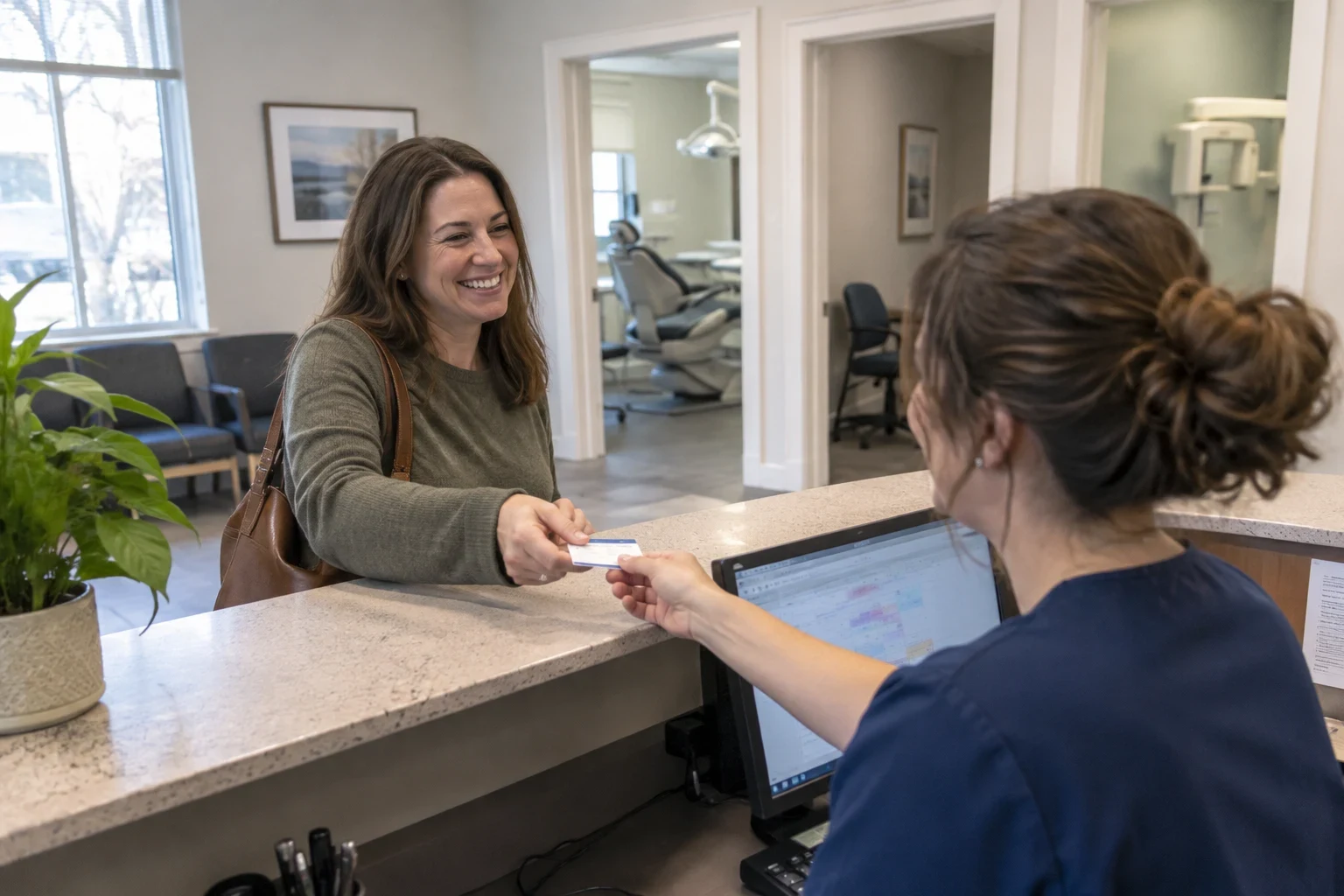
Small issues stay small when someone looks closely and on schedule. Phone our office, pick an appointment that fits your week, and we will sort out insurance or payment before you arrive.